Polish Naval Academy students advance unmanned maritime systems
Polish Naval Academy (AMW) teams in Gdynia have emerged as leaders in the development of unmanned maritime platforms, securing top awards in the Ministry of Defence’s latest competition for autonomous systems. The winning projects, Korum and Nerpa Shadow, demonstrate the potential of next-generation naval robotics for both operational and civilian maritime applications.
security education navy nato ports equipment and technology news10 january 2026 | 10:15 | Source: Gazeta Morska | Prepared by: Kamil Kusier | Print
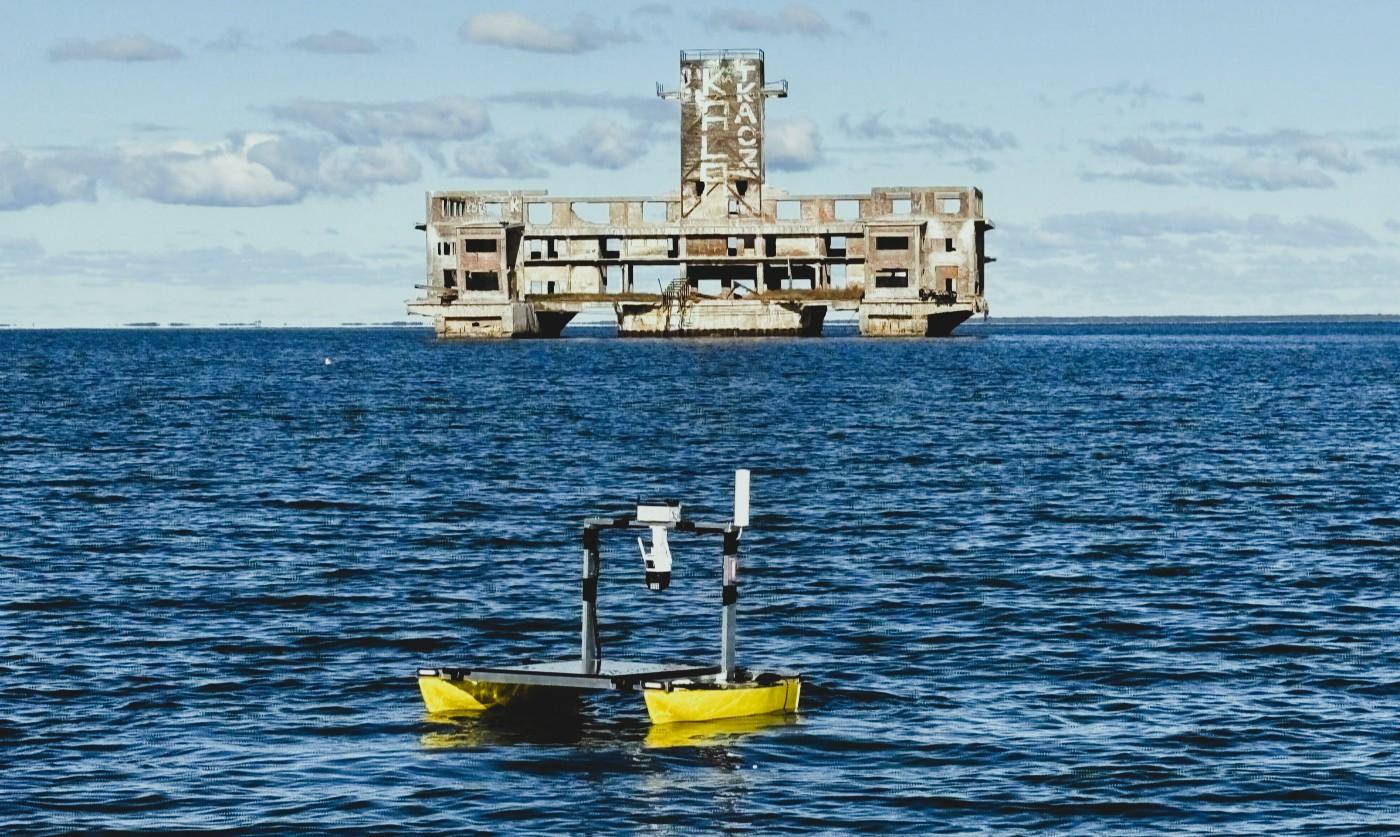
fot. MON
Korum: autonomous surface reconnaissance
Korum is an unmanned surface catamaran designed to detect and classify underwater objects. Equipped with side-scan sonars and neural-network–based data analysis, the vessel can operate autonomously along pre-programmed routes or under direct operator control. Its real-time data transmission allows rapid response to hazards such as unexploded ordnance, underwater obstacles, or infrastructure anomalies.
The platform is intended for versatile applications, from securing critical port areas and shipping lanes to assisting in search-and-rescue operations. According to AMW, Korum combines autonomous navigation, wireless communications, and acoustic monitoring in a cost-effective package, allowing for scalable deployment in both military and civilian maritime operations.
Nerpa Shadow: biomimetic subsurface strike
Nerpa Shadow represents a significant step in biomimetic underwater vehicles. Modeled on marine life, the vehicle uses a nearly silent propulsion system to minimize detection while patrolling designated zones. It combines passive and active hydroacoustic detection to track and engage targets autonomously, with a hybrid propulsion system enabling both stealthy approach and high-speed maneuvering.
This autonomous underwater vehicle (AUV) is designed for potential anti-ship applications, offering a combination of operational precision, stealth, and flexibility. The system illustrates how biomimetic design can enhance the capabilities of next-generation naval robotics.
Integrated unmanned systems ecosystem
Beyond these two standout projects, AMW teams also developed platforms for communication, patrol, and counter-unmanned system operations. Systems like WHISPER-Echo enable reliable underwater communication between vehicles and operators, while TOBIAS provides autonomous surface patrols using computer vision for critical infrastructure monitoring. Additional UAV and UUV prototypes focus on surveillance, threat mitigation, and interoperability across domains.
AMW’s integrated approach envisions a connected ecosystem of surface, underwater, and aerial unmanned systems capable of coordinated operations. This strategy not only strengthens maritime security but also enhances situational awareness and operational efficiency in coastal and offshore environments.
Training the next generation of maritime technologists
The Ministry of Defence awards underscore AMW’s role as a hub for maritime robotics expertise. Starting in the next academic year, the academy will offer specialized programs in unmanned systems, training engineers and operators for both civilian and military applications.
With its combination of research, education, and practical prototyping, the Polish Naval Academy is positioning Gdynia as a key center for autonomous maritime technologies in Europe, with immediate relevance for port security, offshore infrastructure, and naval operations.
Buy us a coffee, and we’ll invest in great maritime journalism! Support Gazeta Morska and help us sail forward – click here!
Kamil Kusier
redaktor naczelny
comments
Add the first comment
see also
"Let everyone know we will prevail". Poland’s armed forces set strategic course for 2026-2039
“Army 500” and strategic transformation: Poland sets the course for long-term deterrence and allied readiness
Medical evacuation from offshore vessel in the Baltic. Rescue 511 helicopter and m/s Huragan deployed
Karol Nawrocki: “The strength of the republic lies in its armed forces”. Security requires national unity
Human trafficking, money laundering, millions frozen. Successful operation by border guard and tax administration
Evening SAR operation in the Baltic. Two kitesurfers stranded offshore
Medical evacuation from sailing ship in Gdynia port. 17-year-old safely transported
Medical evacuation from Danish-flagged vessel Skoven off Łeba. Joint SAR operation in the Baltic Sea
Almost 2.5 million travellers cleared in 2025 by the Maritime Border Guard
Frontex officers train with Polish Maritime Border Guard
ADVERTISEMENT
ADVERTISEMENT