Baltic Sea under prolonged storm regime as severe winter weather persists until New Year’s Eve
The Baltic Sea region is entering a period of prolonged and highly unstable winter weather, with severe storms, snow squalls and gale-force winds expected to affect maritime operations from Monday through at least New Year’s Eve. Forecast analyses indicate that the situation will not be limited to a single frontal passage but will instead evolve into a multi-day storm regime, posing sustained challenges for shipping, ports and coastal communities.
important security weather pomerania west pomerania tricity news28 december 2025 | 21:29 | Source: Gazeta Morska | Prepared by: Kamil Kusier | Print
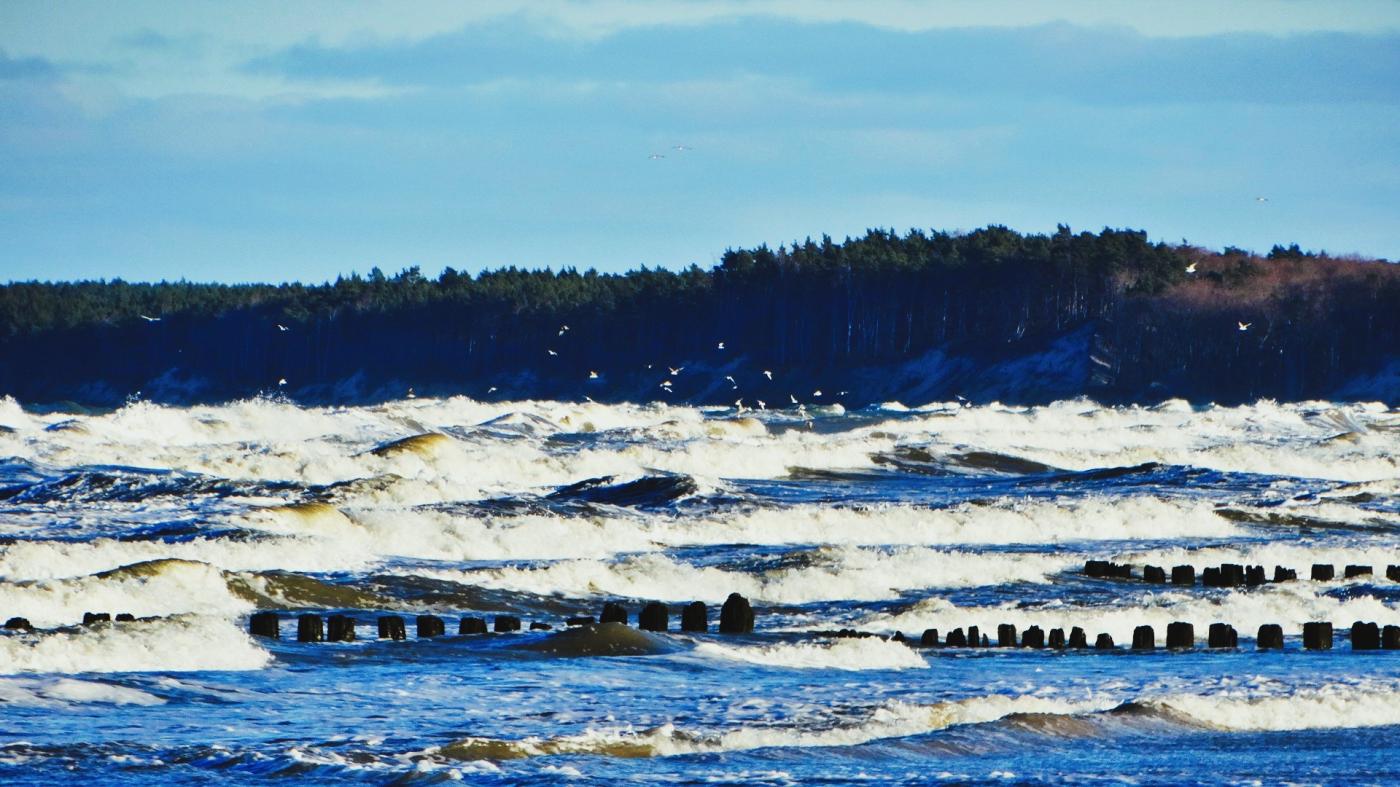
fot. Mariusz Jasłowski
Deep low-pressure system driving severe conditions
At the core of the situation lies a rapidly deepening low-pressure system moving across Northern and Central Europe. The system is being continuously reinforced by cold Arctic air masses flowing southward and moist maritime air over the Baltic, resulting in a steep pressure gradient and intense atmospheric instability.
According to Mariusz Jasłowski, meteorologist and editor-in-chief of meteo24.com.pl, speaking to Daily Mare, this setup is particularly concerning from a maritime perspective.
Mariusz Jasłowski notes that this is not a short-lived weather event, the pressure system will remain active for several days, producing repeated phases of strong winds, convective snow showers and dangerous sea states. For maritime operations, persistence is the key risk factor in this scenario.
Snow squalls and winter thunderstorms over the Baltic
One of the most critical hazards expected during this period is the development of snow squalls and winter thunderstorms, especially over open waters and coastal zones. These convective systems can form rapidly and intensify within minutes, bringing sudden wind gusts well above forecast averages, near-zero visibility due to heavy snow or graupel, localized electrical activity and abrupt sea-state deterioration.
Mariusz Jasłowski warns that snow squalls at sea are extremely dangerous, as they combine strong gusts with sudden loss of visibility, meaning navigation conditions can change dramatically in a very short time.
Such conditions are particularly hazardous in port approach channels, traffic separation schemes and near offshore installations.
Storm-force winds reaching up to 120 km/h
The most intense phase of the storm is expected from Monday evening into Tuesday morning, when wind gusts along the coast and over exposed marine areas may reach 100 to 110 km/h, with local peaks up to 120 km/h. While wind speeds may fluctuate later in the week, forecast models indicate that strong to gale-force winds will persist, maintaining a high-energy sea state.
This wind regime is expected to generate steep, short-period waves typical for the Baltic, heavy strain on mooring systems in exposed ports, increased risk of overtopping along breakwaters and quays, and difficult manoeuvring conditions for vessels entering or leaving harbour.
Weather impact shifts westward by New Year’s Eve
As the week progresses, the most active frontal zones are forecast to shift westward, placing the western Polish coast under the greatest impact on 31 December. Coastal cities such as Świnoujście, Kołobrzeg and the wider Koszalin region may experience the harshest conditions during the New Year’s Eve period.
Mariusz Jasłowski points out that while the entire Baltic coast will remain affected, the western sector is likely to face the strongest winds and the most persistent snowfall around New Year’s Eve.
For coastal communities, this raises concerns over power disruptions, transport delays and localized flooding linked to storm surge and wave action.
Operational consequences for shipping and ports
The extended duration of the storm significantly increases operational risks. Port authorities, shipping operators and offshore service providers should anticipate repeated disruptions to ferry services, restrictions on pilotage and port entries, delays in cargo handling and offshore operations, and elevated demand for maritime rescue readiness.
Ice accretion on vessels and port infrastructure may further complicate operations, particularly during prolonged exposure to strong winds and freezing precipitation.
A call for caution through year’s end
Maritime experts stress that the coming days demand heightened situational awareness and conservative decision-making. Continuous monitoring of updated forecasts and marine warnings will be essential, as conditions may evolve rapidly.
Mariusz Jasłowski concludes that winter storms on the Baltic are unforgiving, and when severe weather persists for several days, fatigue and infrastructure stress become just as dangerous as the storm itself.
Improvement in conditions is not expected before early January, meaning operators should plan for extended weather-related constraints rather than a rapid return to normal operations.
Buy us a coffee, and we’ll invest in great maritime journalism! Support Gazeta Morska and help us sail forward – click here!
Kamil Kusier
redaktor naczelny
comments
Add the first comment
see also
Defence.Hub strengthens capabilities in technologies supporting maritime infrastructure security
Damen to build 13 SAR units for Turkey. Strengthening search and rescue in the Aegean Sea
Sebastian Kluska, director of MSPiR SAR: No room for improvisation at sea. Skills and judgment matter
MS Kapitan Poinc to deploy FRB 850 in Baltic SAR upgrade
105th life-saving mission. Naval Aviators conduct double "Heart Action" transport
Another successful medical evacuation over the Baltic Sea. Yet another intervention at offshore wind farms
Fishing trip on Vistula Lagoon cut short due to missing certificates
Drifting tanker near Malta highlights risks linked to the global “shadow fleet”
Cross-border SAR operation on the ice of the Gulf of Bothnia
Body recovered from the waters of Puck Bay near Babie Doły in Gdynia
ADVERTISEMENT
ADVERTISEMENT