A new era of maritime special operations: VICTA and MARS by SubSea Craft lead a revolution across global waters
As global security challenges evolve and naval forces confront increasingly complex operational environments, the demand for agile, low-signature and multi-domain maritime platforms has never been greater. Into this space steps SubSea Craft (SSC) — a fast-rising British maritime technology company whose disruptive approach to design, manufacturing and systems integration is drawing significant attention from defence communities worldwide.
security business maritime economy investments navy worldwide equipment and technology news17 november 2025 | 07:24 | Source: Gazeta Morska | Prepared by: Kamil Kusier | Print
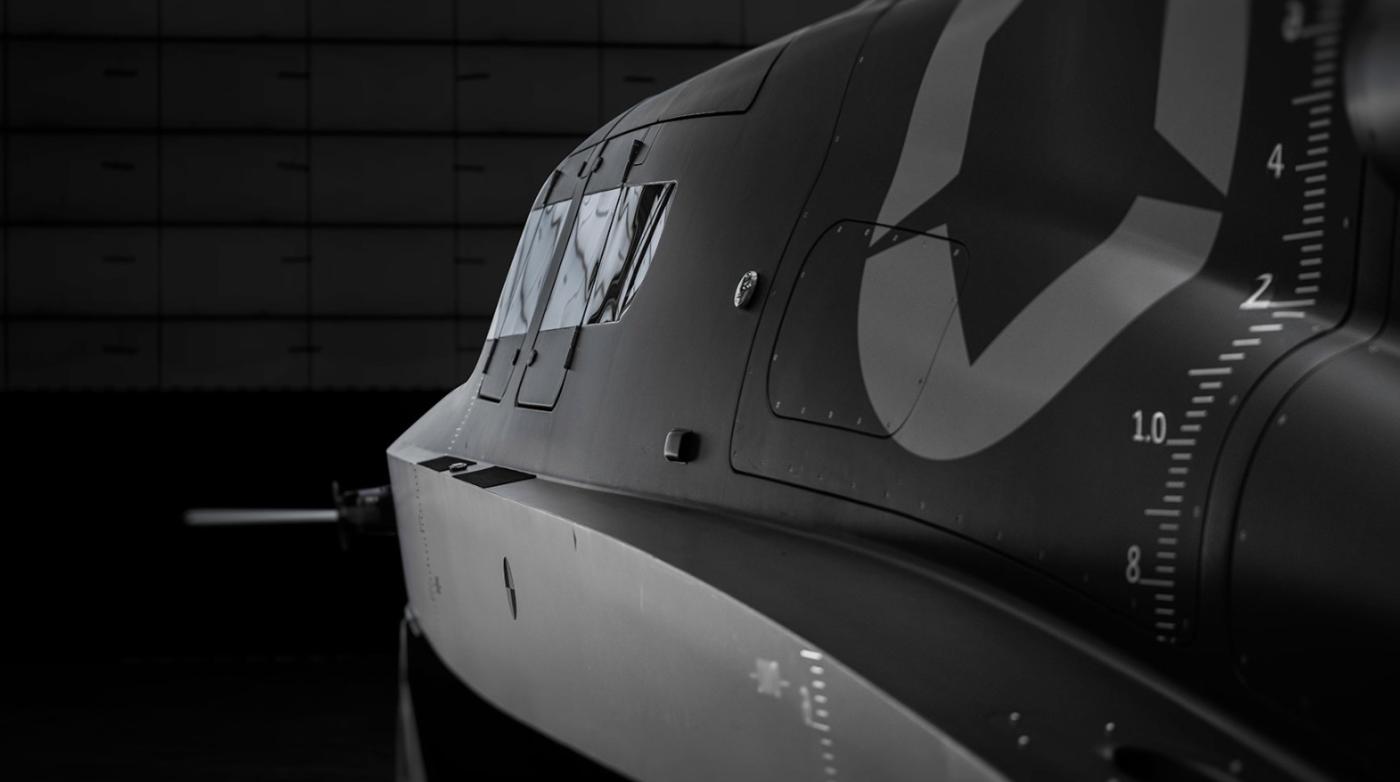
fot. Subsea Craft
With the unveiling of its two flagship platforms — the VICTA diver delivery system and the MARS autonomous surface vessel — SubSea Craft signals a transformative shift in how maritime special forces, expeditionary units and coastal defence networks will operate throughout the 2020s and beyond. Together, these systems form an integrated ecosystem of high-speed, low-observable and network-enabled capabilities suited to modern littoral and near-peer scenarios.
VICTA – A Dual-Domain Leap Forward for Maritime Special Forces
High-speed surface mobility paired with covert underwater insertion
At the centre of SSC’s innovation portfolio is VICTA, a hybrid surface-subsurface platform that challenges traditional distinctions between fast boats and wet submersibles. Designed as a next-generation Diver Delivery Unit (DDU), VICTA offers operators the unprecedented ability to travel long distances at high speed on the surface before executing a rapid transition to submerged mode for covert infiltration.
This dual-domain agility — achievable within approximately two minutes — provides a level of operational flexibility that conventional SDVs or RHIBs alone cannot match. With modern conflict zones increasingly characterised by anti-access/area-denial (A2/AD) systems, VICTA’s capability to shift seamlessly between visibility and stealth provides commanders with a strategic edge at the waterline.
Technical highlights and performance envelope
Constructed from lightweight carbon composite materials, VICTA combines durability with a dramatically reduced acoustic and radar signature. Key specifications include:
- Surface speed exceeding 40 knots
- Submerged speed around 8 knots
- Operational depth of approximately 30 metres
- Surface range near 250 nautical miles
- Capacity for up to eight operators plus mission equipment
The platform employs a hybrid propulsion architecture — diesel engines for surface operations and electric thrusters underwater — supported by a digital fly-by-wire control suite that enhances stability, submerged manoeuvrability and pilot situational awareness.
Its modular interior layout allows VICTA to be configured not only for special forces insertion, but also for ISR payload carriage, communications packages or small-scale logistics support, making it a highly adaptable asset for a range of mission profiles.
MARS – A Next-Generation Autonomous Surface Vessel Built at Speed
Designed, engineered and launched in approximately 100 days
Where VICTA serves as a disruptive manned platform, MARS (Maritime Autonomous Reconnaissance System) represents SSC’s push into the rapidly expanding world of naval autonomy. Remarkably, the first iteration of the vessel was designed, constructed and launched within roughly 100 days, a pace rarely seen in the maritime defence sector. This accelerated prototyping underscores SSC’s ambition to deliver responsive, scalable solutions for modern navies.
Multi-mission autonomy and modular payload integration
MARS is engineered as a rugged, low-signature unmanned surface vessel (USV) capable of operating independently or alongside crewed assets in a manned-unmanned teaming (MUM-T) framework. Its open digital architecture enables seamless integration of:
- ISR/ISTAR sensors
- Electronic warfare (EW) payloads
- Kinetic strike modules
- Communications and relay systems
- Patrol and coastal defence equipment
- Logistic support pods
With speeds reaching approximately 30 knots and an operational range above 500 km, MARS is designed to maintain persistent presence even in high-risk or GPS-challenged environments.
SSC’s collaboration with Greenroom Robotics significantly enhances MARS’s autonomy suite, positioning the platform as a flexible tool for navies seeking scalable unmanned fleets for surveillance, maritime security, and rapid-response missions.
A Combined Maritime Ecosystem – Multi-Domain Synergy at Sea
While each platform is impressive in its own right, the true impact emerges when VICTA and MARS are considered together. SSC envisions a unified operational ecosystem in which:
- VICTA delivers personnel, conducts covert infiltration and deploys mission payloads
- MARS operates as a forward sensor node, electronic warfare asset or autonomous escort
- Both platforms integrate into C5ISR networks and support distributed maritime operations
- Combined manned and unmanned capabilities extend situational awareness, lethality and survivability
Such synergy aligns with emerging naval doctrines that emphasise disaggregated, agile and multi-domain forces, particularly in contested littoral environments.
Strategic and Industrial Implications
SubSea Craft’s progression is supported by growing international partnerships, including a cooperation framework with Skaramangas Shipyards in Greece, strengthening opportunities for European production and sustainment. Meanwhile, the company’s alignment with AUKUS-related technological priorities — autonomy, low-signature design and rapid delivery timelines — reinforces its relevance across Atlantic and Indo-Pacific theatres.
For the maritime defence sector, VICTA and MARS represent:
- The accelerating shift toward lightweight, adaptable maritime platforms
- The rise of autonomous and hybrid systems as force multipliers
- Increased demand for modular payloads and open-architecture design
- A move away from single-platform solutions toward networked maritime ecosystems
- The strategic value of rapid prototyping and responsive innovation cycles
Conclusion – Charting the Future of Special Operations at Sea
With VICTA and MARS, SubSea Craft positions itself at the forefront of a global transformation in maritime special operations and unmanned naval capabilities. These platforms showcase a forward-looking approach that blends speed, stealth, autonomy and modularity — attributes that will define the next generation of operations in the world’s most contested waters.
As navies prepare for increasingly complex littoral engagements, the arrival of SSC’s integrated ecosystem signals not just an incremental improvement, but a fundamental evolution in how maritime missions will be conceived, planned and executed in the decades ahead.
see also
Buy us a coffee, and we’ll invest in great maritime journalism! Support Gazeta Morska and help us sail forward – click here!
Kamil Kusier
redaktor naczelny
comments
Add the first comment
see also
Commodore Przemysław Karaś appointed deputy commander of the Maritime Operations Centre - Naval Component Command
Radmor hosts delegation from the Republic of Turkey. Advancing maritime security cooperation
French Navy expands global operations from the Pacific to the Red Sea
"Let everyone know we will prevail". Poland’s armed forces set strategic course for 2026-2039
“Army 500” and strategic transformation: Poland sets the course for long-term deterrence and allied readiness
Medical evacuation from offshore vessel in the Baltic. Rescue 511 helicopter and m/s Huragan deployed
Karol Nawrocki: “The strength of the republic lies in its armed forces”. Security requires national unity
Human trafficking, money laundering, millions frozen. Successful operation by border guard and tax administration
Evening SAR operation in the Baltic. Two kitesurfers stranded offshore
Medical evacuation from sailing ship in Gdynia port. 17-year-old safely transported
ADVERTISEMENT
ADVERTISEMENT