









30 Years of Offshore Wind: Tunø Knob and the Beginning of a Global Industry
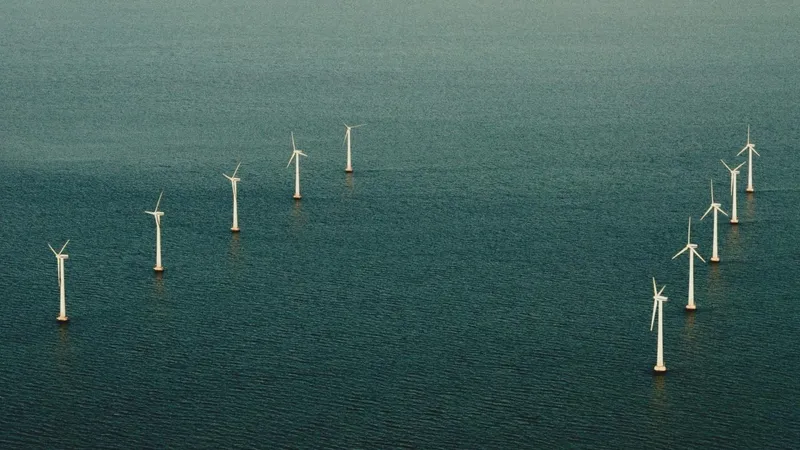
In 1995, off the coast of Denmark, a pioneering offshore wind project quietly made history. Tunø Knob, the world’s first offshore wind farm, marked a turning point not just for renewable energy, but for the entire maritime sector. Now, 30 years on, the industry looks back on this milestone as the foundation of a global offshore wind revolution.
In brief
The world's first offshore wind farm, Tunø Knob off the coast of Denmark, was completed in 1995, 30 years ago. Vestas installed 10 Vestas V39-500 kW turbines from a floating unit at the time, and the work was led by Bjarne Iversen, who is still employed by the company today. The installation was completed in just five days, despite losing one day to weather, ahead of schedule and under budget, as Bjarne Iversen recalls. Vestas now has more than 1,500 turbines installed offshore and the V236-15.0 MW model.
The project was led by Vestas, which installed 10 V39-500 kW turbines from a marine vessel under the leadership of Bjarne Iversen, who still works at the company today. He was joined on the installation team by Peer Jessen and Mogens E. Andersen, both of whom also remain with Vestas – a testament to the lasting impact of those formative years.
Despite losing a day to bad weather, the installation was completed in just five days. At the time, offshore wind was uncharted territory, with many in the industry sceptical of its feasibility. As Iversen recalls:
- It was our first offshore wind farm, and there was a lot we didn’t know yet. It was seen as a very complex operation, and we had to be meticulous – we knew this would set a precedent. In the end, we finished ahead of schedule and under budget.
Far from being a one-off experiment, the success of Tunø Knob laid the groundwork for an industry that would go on to become central to the energy transition.
Today, Vestas has installed more than 1,500 offshore turbines and continues to play a leading role in shaping the future of offshore wind. From those early days to the commercial deployment of the cutting-edge V236-15.0 MW turbine, the company’s offshore journey has been marked by innovation, operational excellence, and an evolving focus on safety and sustainability.
The offshore sector itself has undergone massive transformation, with dramatically improved safety standards, logistical capabilities, and project execution models. What started as a bold vision in the mid-1990s has matured into one of the most dynamic and vital sectors of global energy.
Offshore wind now stands as a cornerstone of secure, sustainable, and scalable power production – and it all began with a small project off the Danish coast three decades ago.
Source: Gazeta Morska · Compiled by: Kamil Kusier
Related articles
 Shipbuilding industry Poland christens ro-pax ferry Bursztyn Unity in Szczecin on Independence Day. Ystad service starts 18 November
 Energy and offshore Orlen Neptun deploys V-LiDAR buoys at Baltic West ahead of Poland's 2027 offshore wind auction
 Energy and offshore Equinor takes over Bałtyk 2 and 3 O&M base in Łeba. Port to serve 1.44 GW of offshore wind for 30 years
 Navy and defence Port Gdański Eksploatacja secures NATO NCAGE code. Gdańsk port company lines up for defence tenders
 Shipbuilding industry Ex-Enterprise towed to Mobile under $418.5m contract. Test case for Nimitz-class disposal begins
 Energy and offshore Energa renames Gdańsk gas plant company as foundations for 6,000-tonne turbine and boiler are laid
Comments (0)
The discussion is moderated by the editors: a comment appears after review. Your e-mail address is not published.
Nobody has commented on this article yet.