







Three dead as Icelandic fishing vessel Jökull sinks off East Iceland, Polish crew member among victims
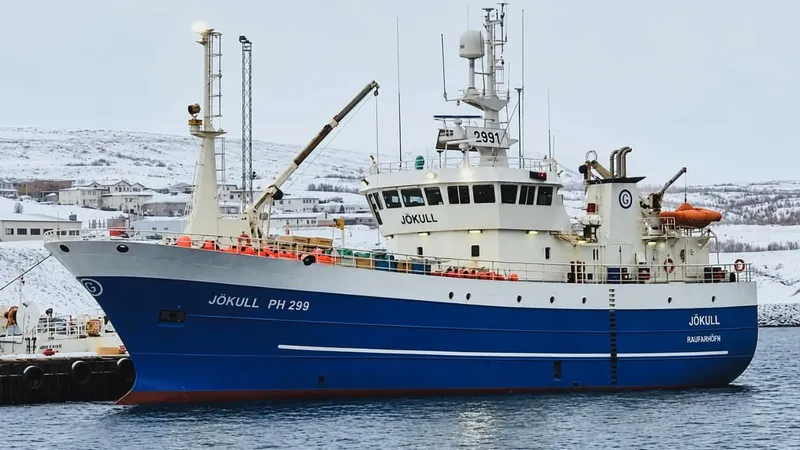
Three crew members died and fourteen were rescued after the Icelandic fishing vessel Jökull ÞH 299 sank around 60 nautical miles east of Iceland. One of the victims was Polish, while the second Polish crew member survived.

In brief
The Icelandic fishing vessel Jökull ÞH 299 sank on 25 November 2026 about 60 nautical miles east of Iceland. Three crew members died and fourteen were rescued. One of the victims was a Polish fisherman from the Ustka municipality, while the second Polish crew member survived. A Coast Guard helicopter breached range guidelines to reach the survivors.
The vessel went down on the evening of Wednesday 25 November 2026 in the Héraðsdjúp area, about 100 kilometres off Iceland's east coast. Jökull ÞH 299 is owned by Húsavík-based GPG Seafood and operated out of Raufarhöfn. It was fishing for Greenland halibut with nets, which explains why it was so far from land. There were 17 people on board, including two Polish nationals.
Nineteen minutes from alarm to sinking
At 17:05, Jökull's captain contacted the Icelandic Coast Guard to report a broken hatch at the stern and water entering the vessel. Coast Guard controllers instructed the crew to put on survival suits and were soon told that the crew were abandoning ship. At 17:24, an automated satellite signal indicated that the vessel had sunk, just nineteen minutes after the leak was reported.
All crew members ended up in the freezing water. Their rescue equipment failed, and the fishermen survived by holding on to one another. Some of them tied themselves together, and the group had a radio with which they kept in contact with the Coast Guard. Winds at the scene reached 13 to 20 metres per second, with waves initially reported at 4 to 5 metres and later at up to 9 metres, and the operation took place in total darkness.
A helicopter crew that broke the rules to save lives
The Coast Guard launched a full-scale operation. The surveillance aircraft TF-SIF reached the area at around 20:00, while Landsbjörg rescue vessels were dispatched from Raufarhöfn, Vopnafjörður and Neskaupstaður and fishing vessels working off the east coast joined the search. The rescue helicopter arrived shortly after 21:00 and spent around two hours winching survivors from the water in extremely difficult conditions. The survivors were flown to Egilsstaðir, where doctors were waiting.
The rescuers took an exceptional risk. Icelandic rescue helicopters do not normally fly alone more than 20 nautical miles offshore, yet this time a single aircraft flew 60 nautical miles out to sea. Georg Kr. Lárusson, Director General of the Icelandic Coast Guard, acknowledged that the helicopter crew had "openly breached" the guidelines, but said that with Iceland's limited number of helicopters it was the only chance to save the crew. He praised the rescuers for their courage.
– Fourteen people were saved after four hours in rough seas and total darkness. Three members of the crew lost their lives, which is a grief beyond words – said Kristrún Frostadóttir, Prime Minister of Iceland.
The Prime Minister said that at the start of the evening it was not clear whether anyone would survive, and described the sinking as one of Iceland's deadliest maritime accidents in recent decades.
– This was a tragic accident, but also a remarkable rescue achievement – added Kristrún Frostadóttir.
Polish fisherman from Ustka among the dead
Poland's Ministry of Foreign Affairs confirmed that two Polish nationals were among the crew. One of them died, while the other was rescued and is safe. As established by Gazeta Morska, Daily Mare's Polish-language sister title, the fisherman who died came from the Ustka municipality in Pomerania. In Iceland he lived in Húsavík, the home town of the vessel's owner. Out of respect for his family, we are not publishing his name.
Poles have for years made up a large share of the workforce in Iceland's fishing and fish processing industries. For many families from Poland's Baltic coast, working on Icelandic vessels continues a long fishing tradition at a time when fishing opportunities in the Baltic have sharply declined. The loss of Jökull therefore also hits the fishing community in Pomerania, including the Ustka area, one of the most fishing-oriented places on the Polish coast.
Survival suits made the difference
Initial information indicates that the damaged stern hatch, through which water entered the vessel, was the direct cause of the sinking. An investigation has been opened by Iceland's state accident investigation board, and Coast Guard Director General Georg Kr. Lárusson declined to speculate on the cause of the sinking. Rescuers already point out that fourteen fishermen survived several hours in icy water thanks to their survival suits, which slow down heat loss and keep a person afloat, and because they stayed together and maintained radio contact.
The loss of Jökull is a reminder of how dangerous work at sea remains, especially on remote North Atlantic fishing grounds. It also shows how much depends on a quick distress call, working rescue equipment and the determination of rescue crews. The Daily Mare editorial team extends its deepest condolences to the family and friends of the fisherman from Ustka and to the families of all the victims.
Source: Gazeta Morska
Comments (0)
The discussion is moderated by the editors: a comment appears after review. Your e-mail address is not published.
Nobody has commented on this article yet.