







WB Group launches WB SPACE as Polish defence group expands into satellite communications and quantum security
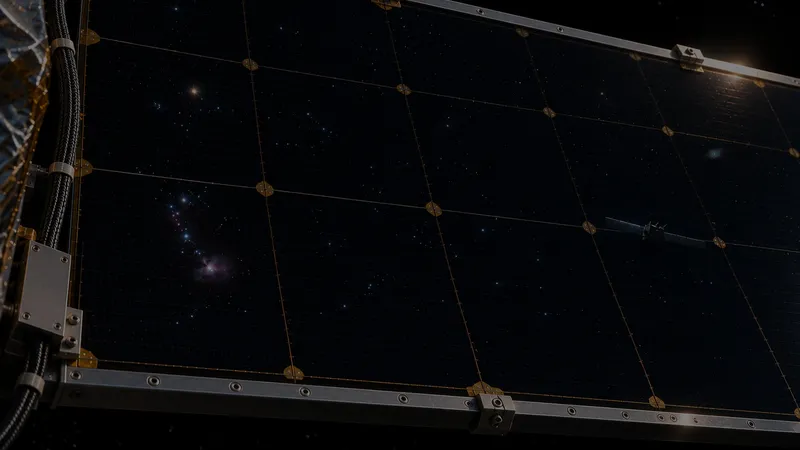
WB Group, Poland's largest privately owned defence group, has added a new space company to its portfolio. WB SPACE, led by Kamila Matela, specialises in satellite communication systems, quantum technologies, post-quantum cryptography and software for next-generation satellites. The company will deliver projects together with national and regional industry institutions, including the European Space Agency, and is building partnerships with space and New Space companies across Europe.

In brief
WB Group has launched WB SPACE, a company specialising in satellite communications, quantum technologies and post-quantum cryptography, led by Kamila Matela. It joins RADMOR's Space Technology Centre in Gdynia and WB Centrum Kompozytów, and will work with partners including the European Space Agency.
The move marks another step in the expansion of the group, headquartered in Ożarów Mazowiecki, into orbital technologies and the ground segment. WB SPACE joins two existing pillars of WB Group's space activity: the Space Technology Centre operating within RADMOR in Gdynia and WB Centrum Kompozytów in Czechowice-Dziedzice. WB Group employs almost 3,000 people and is one of the world's leading suppliers of multi-domain unmanned systems, as well as command and fire control, communications, reconnaissance and strike systems.
Optical links, data processing and satellite control
WB SPACE will focus on proven solutions for the space sector, particularly optical communications, data storage and processing, and the control of satellite mechanisms and instruments. The company plans to expand its expertise into further civil and defence applications. Its launch reflects a broader shift in which space has become a fully fledged security domain, where secure communications and sovereign satellite data are increasingly decisive for military capability.
– The rapid development of the space sector opens up broad prospects for the solutions we have been creating at WB Group for years. We want to use our experience and engineering potential to set the direction for the expansion of Polish industry in this field – said Kamila Matela, President of WB SPACE.
Post-quantum cryptography is one of the company's key areas. It covers encryption methods designed to remain secure even once quantum computers are capable of breaking today's protection. For satellites, which remain in orbit for many years, resilience against future threats has to be built in from the very start of system design.
Gdynia at the heart of WB Group's space ambitions
Pomerania plays a central role in the group's space plans. RADMOR, based in Gdynia since 1947 and for many years also known as a manufacturer of maritime radio equipment, is today one of the key suppliers of communication systems to the Polish Armed Forces. In 2024, WB Group announced the creation of a Space Technology Centre within the company, whose first task is to provide continuous, all-weather access to Earth observation data around the clock.
The project includes a ground control station and solutions based on Polish cryptography. RADMOR is expanding its facilities on Hutnicza Street in Gdynia to house the centre. The company has also signed a cooperation agreement with SpaceForest, another Gdynia-based developer of space technologies.
A geostationary satellite for the Polish Armed Forces
WB Group's flagship space project is RADMOR's cooperation with Airbus Defence and Space and Thales Alenia Space. The industrial cooperation agreement to develop a geostationary telecommunications satellite for Poland's Ministry of National Defence was signed in Gdańsk on 20 April 2026, in the presence of Deputy Prime Minister and Defence Minister Władysław Kosiniak-Kamysz and French Minister of the Armed Forces Catherine Vautrin.
The satellite is being developed under the EU's Readiness 2030 plan and will provide the Polish Armed Forces with secure communications. Airbus and Thales Alenia Space bring their experience in satellite platforms and military communication payloads, while RADMOR is responsible for the secure ground segment. The system is designed to be cyber-secured in both the ground and space segments and resilient against jamming.
– Our goal is to become a leader in technologies supporting situational awareness and to actively shape the future of satellite systems. By developing our own capabilities, we are consistently building Poland's technological sovereignty in the space domain – added Kamila Matela.
Polish composites already in orbit
The group's second space pillar is WB Centrum Kompozytów. The Czechowice-Dziedzice company is the only Polish firm capable of manufacturing structures for orbital platforms from advanced composite materials. It gained these capabilities through a multi-year technology transfer programme with Thales Alenia Space, and its structures have already been launched into Earth orbit.
In 2025, the company completed its first delivery of structural panels for the CHIME satellite, which Thales Alenia Space is building for the European Space Agency. CHIME, the Copernicus Hyperspectral Imaging Mission for the Environment, will provide data supporting agriculture and biodiversity management, among other services. The addition of WB SPACE is a natural next step for a group that has long drawn on the engineering experience of its companies in designing and manufacturing advanced electronic components and systems.
Record funding for Poland's space sector
WB SPACE is entering the market at a time of record investment in Poland's space industry. Exactly one year ago, on 27 November 2025, at the ESA Ministerial Council in Bremen, Poland pledged almost EUR 550 million to ESA optional programmes for 2026–2028. This is the largest contribution in the history of Poland's membership of the agency, following a tenfold increase in its contribution between 2023 and 2025.
A higher contribution translates into more contracts for Polish companies and universities, as the funds return to domestic industry in the form of orders. In Bremen, Poland also signed a letter of intent to establish an ESA technology centre in Warsaw, the first of its kind on the EU's eastern flank, and joined the European Resilience from Space initiative, which develops dual-use satellite applications. For companies such as WB SPACE, combining civil and defence expertise, this opens the door to strategic European projects.
Source: Gazeta Morska
Comments (0)
The discussion is moderated by the editors: a comment appears after review. Your e-mail address is not published.
Nobody has commented on this article yet.