USS Gerald R. Ford calls at Oslo. Naval power and allied cooperation in the high north
On Friday, the world’s largest aircraft carrier, USS Gerald R. Ford, will arrive in Oslo. The carrier is escorted by the Royal Norwegian Navy’s frigate KNM Thor Heyerdahl, corvette KNM Skjold, and the Coast Guard vessel KV Nornen.
navy worldwide nato news12 september 2025 | 08:43 | Source: Gazeta Morska | Prepared by: Kamil Kusier | Print
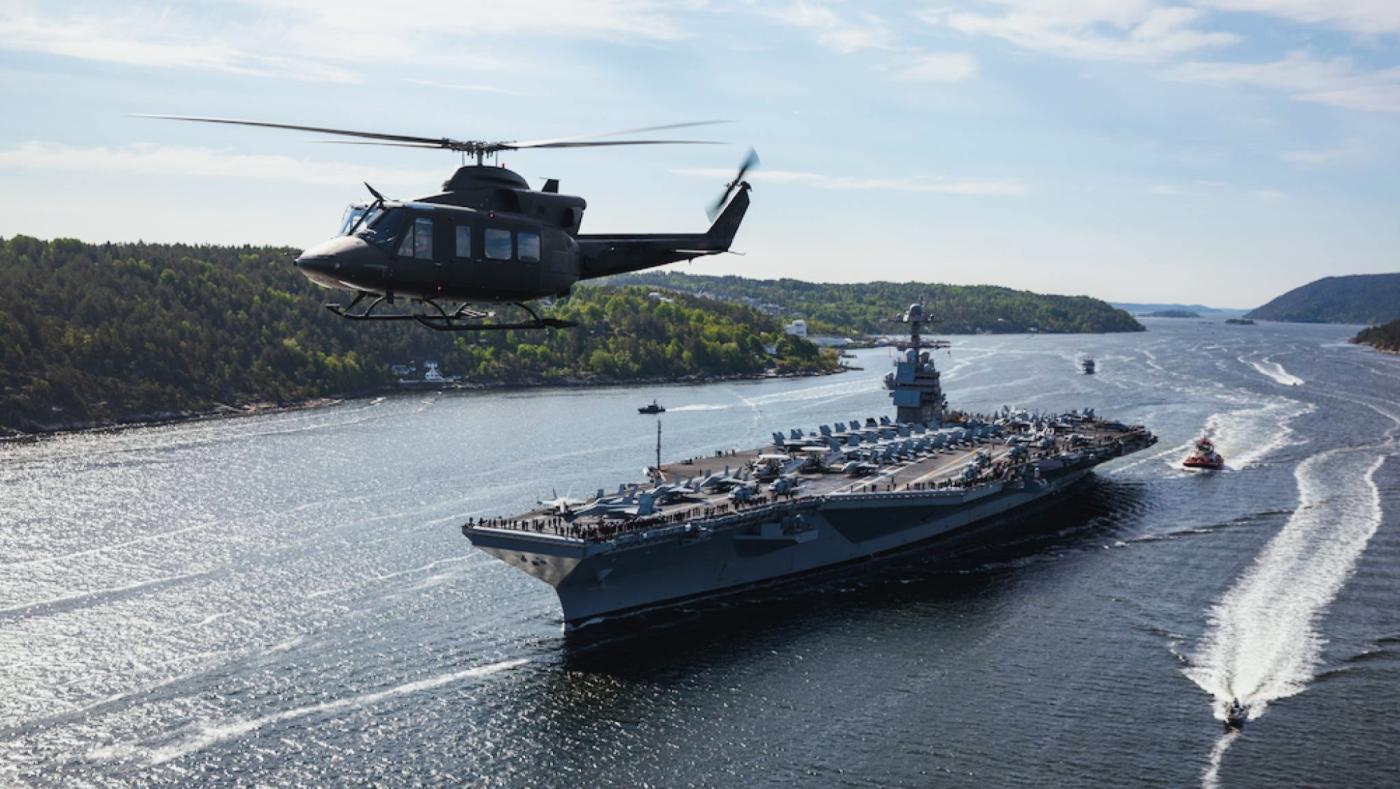
fot. Forsvaret
This marks the third visit of a U.S. carrier to the Norwegian capital in as many years. In November 2024, Oslo hosted USS Harry S. Truman, while USS Gerald R. Ford made its first port call in May 2023.
Integrated training in Norwegian waters
Prior to arrival, the carrier strike group has been operating alongside the Norwegian Armed Forces in the North Sea and surrounding waters. Exercises have spanned multiple domains – maritime, air, and land – reflecting the increasingly integrated nature of modern operations.
According to Vice Admiral Rune Andersen, Chief of Norway’s Joint Headquarters, U.S. carrier presence in the region has become part of “the normal security picture” in the high north.
- It demonstrates that our closest ally is committed to safeguarding stability and security in the region, Rune Andersen stated.
Civil-military preparedness – total defence in practice
Hosting allied strike groups requires more than naval coordination. Norway employs its totalforsvaret concept – a comprehensive defence model built on military-civilian cooperation. Planning for the visit has involved the Norwegian Coastal Administration (Kystverket), Civil Aviation Authority (Luftfartstilsynet), Avinor, the Directorate for Civil Protection (DSB), as well as Oslo Police District, the County Governor, and Oslo Port Authority.
Such integration ensures Norway can provide the necessary logistical and operational support to large-scale allied deployments – a critical capability in times of crisis.
Security restrictions in air and at sea
A number of restrictions are in effect during the carrier’s stay:
- Airspace: A no-fly zone with a 1 nautical mile radius and up to 3,000 feet altitude applies to all aircraft, including drones, around the carrier.
- Maritime: Civilian vessels must maintain a minimum distance of 1 nautical mile during approach, departure, and anchorage. Military exclusion zones are enforced, with patrols authorized to remove or report violators.
These measures are designed to safeguard both the carrier strike group and the public while ensuring smooth naval operations in Oslofjord.
Strategic significance
The port call underscores the continued strategic importance of Norway within NATO’s northern flank. Beyond the symbolic value of hosting the world’s most advanced aircraft carrier, the visit highlights operational readiness, interoperability, and allied commitment to collective security in the North Atlantic and Arctic approaches.
Buy us a coffee, and we’ll invest in great maritime journalism! Support Gazeta Morska and help us sail forward – click here!
Kamil Kusier
redaktor naczelny
comments
Add the first comment
see also
Navantia and Fincantieri deepen cooperation on the european patrol corvette programme
"Let everyone know we will prevail". Poland’s armed forces set strategic course for 2026-2039
“Army 500” and strategic transformation: Poland sets the course for long-term deterrence and allied readiness
Karol Nawrocki: “The strength of the republic lies in its armed forces”. Security requires national unity
Polish Navy Divers complete intensive winter under-ice training
Stadt Naval to deliver electric propulsion system for Polish rescue vessel Ratownik
Medical evacuation from Danish-flagged vessel Skoven off Łeba. Joint SAR operation in the Baltic Sea
Damen Shipyards and Blue Water Autonomy announce license for Liberty-class autonomous vessel for the U.S. Navy
ITS Virginio Fasan and USS Bulkeley conduct PASSEX in eastern Mediterranean
NATO strengthens operations in the north: alliance boosts Arctic presence
ADVERTISEMENT
ADVERTISEMENT