







The Baltic: Northern Europe's new economic and geopolitical centre. Can Poland seize a historic opportunity?
128 million tonnes of cargo in Polish ports, first power from an offshore wind farm, three LNG terminals in the pipeline and a NATO mission guarding cables on the seabed. The Baltic is no longer the quiet backyard of European trade. It has become a place where the economy, energy and security can no longer be separated. For Poland this is an opportunity not seen in decades, but a coastline alone will not deliver it.

In brief
128m tonnes in Polish ports, first offshore wind power, new frigates and submarines. An in-depth analysis of the Baltic's new role and Poland's options.
For years the Baltic Sea sat in the shadow of the Mediterranean and the Atlantic in Europe's strategic debate. Four processes changed that, and they arrived almost at once: Russia's war against Ukraine, the accession of Finland and Sweden to NATO, the energy transition and the reshaping of supply chains after the pandemic. Each of them alone would have raised the region's profile. Together they mean that many of the questions about Northern Europe's security and competitiveness are now being answered here.
Almost a NATO sea, but not a safe one
Since Finland joined NATO in 2023 and Sweden in 2024, eight of the nine Baltic coastal states have been members of the Alliance. The ninth is Russia, which retains access to the sea in the Gulf of Finland and in the Kaliningrad exclave, along with the ability to project influence across the whole region.
The new threats rarely resemble a conventional conflict. In their report "Resilient Baltic", published in September 2026, analysts at the Warsaw-based Centre for Eastern Studies (OSW) documented six cases of damage to subsea cables and gas pipelines between 2022 and 2025. The best known are the rupture of the Balticconnector gas pipeline in October 2023 and of the Estlink 2 power cable in December 2024, when the tanker Eagle S dragged its anchor along the seabed for around 90 km. The cable repair alone was estimated at about 70 million dollars.
NATO responded with Baltic Sentry, a mission launched in January 2025. Warships, aircraft and maritime drones track vessels behaving suspiciously above critical infrastructure. The Alliance says the mission has a deterrent effect, but stresses that the threat has not gone away.
– These are times in which NATO, through Operation Baltic Sentry, is saying clearly: there is no room for anonymity – said Commander Kacper Sterne, former commander of Standing NATO Mine Countermeasures Group One (SNMCMG1).
Baltic security therefore means far more today than protecting borders. It also means uninterrupted energy supplies, reliable communications and ports that keep working, and responsibility for all of that is shared by navies, maritime administrations, infrastructure operators and energy companies.
The shadow fleet: risk under a foreign flag
A separate problem is the so-called shadow fleet: tankers with opaque ownership, doubtful insurance and frequently changed flags that carry Russian oil around the sanctions regime. According to OSW, Baltic ports handle about half of Russia's seaborne exports of crude oil and petroleum products. The European Union, the United Kingdom and the United States have sanctioned around 700 tankers so far, and ten incidents involving such vessels were recorded in the Baltic between January 2023 and May 2026.
The risk is not only political. The Baltic is a shallow, almost enclosed sea, so the loss of an ageing tanker would hit fisheries, tourism and ports for years, and establishing who should pay for the damage might prove impossible. That is why OSW recommends, among other measures, diplomatic pressure on flag states and talks on a regional convention that would allow ships failing environmental standards to be detained.
The limit to such action is freedom of navigation, guaranteed by the law of the sea. The Baltic's economic importance comes precisely from open trade, so greater security cannot mean obstacles for legitimate shipping.
Warships, satellites and drones: how Poland watches the sea
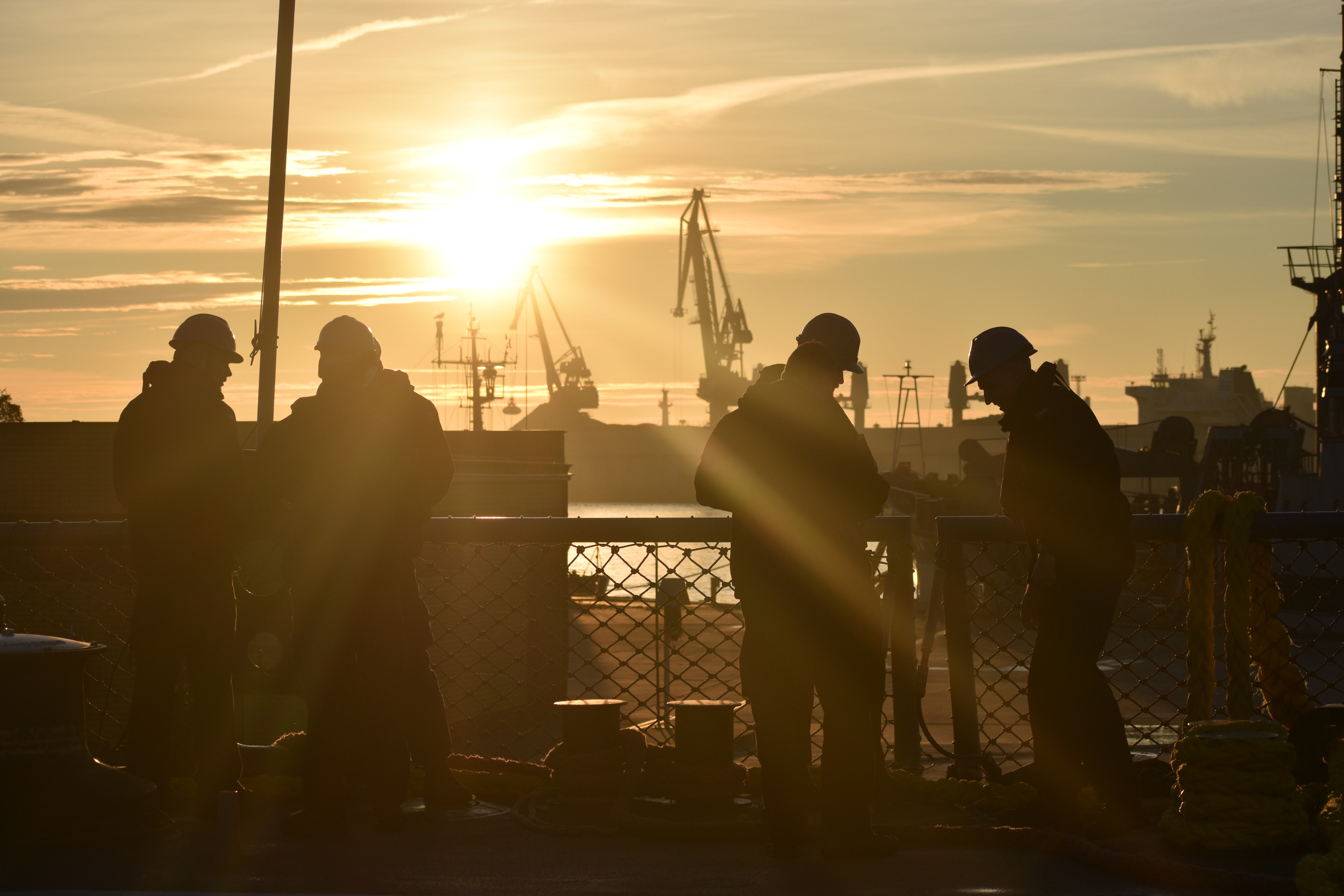
Poland is answering the new threats with its largest naval modernisation programme in decades. Three Miecznik frigates worth about PLN 14.8 billion are being built in Gdynia. The first, ORP Wicher, was launched in August 2026 and is due to enter service in 2029, with Burza and Huragan following in 2030 and 2031. In June 2026 Poland also signed a contract for three A26 submarines under the Orka programme, worth about PLN 20 billion. The first is to reach the Polish Navy in 2030, and a gap-filler submarine from Sweden will bridge the period until then. Remontowa Shipbuilding in Gdańsk has already delivered three Kormoran II class mine countermeasures vessels and is completing three more.
The sea is now also watched from orbit. In May 2026 the armed forces took delivery of MikroSAR, a reconnaissance system built for about PLN 860 million by ICEYE Polska and Wojskowe Zakłady Łączności nr 1. Its three radar satellites see through cloud and at night, which means they also see ships that have switched off their transponders. A fortnight or so earlier Eycore-1 reached orbit: the first satellite carrying a radar built in Poland, the work of a company that grew out of Gdynia-based APS.
Uncrewed systems are the third element. In recent months Polish companies have unveiled several surface patrol platforms able to guard a designated area for weeks without a crew. For services that cannot be everywhere at once, this is a way to keep constant watch over wind farms, cables and port approaches.
Together these three layers, warships, satellites and drones, give Poland something it has never had on the Baltic: the ability to observe its own waters continuously. Much of it is being built at home, so security is at the same time an order book for industry.
Ports: 128 million tonnes is only the beginning
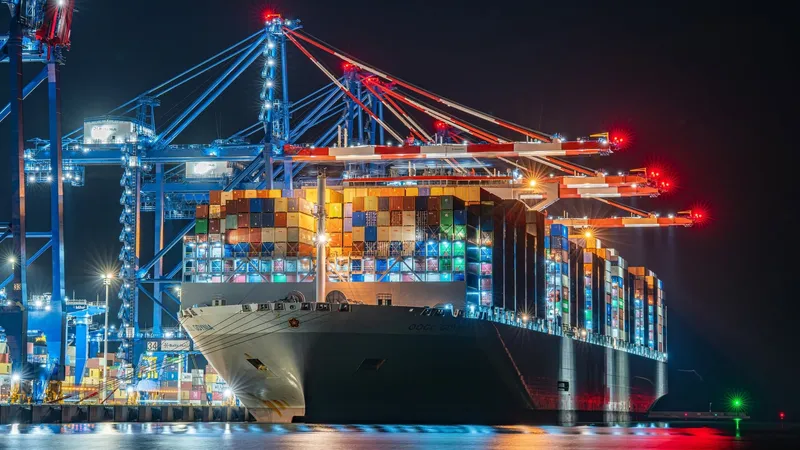
If geopolitics gives the Baltic its rank, ports turn that rank into money. According to Statistics Poland (GUS), Polish seaports handled 128.2 million tonnes of cargo in 2025, 3.2 per cent more than a year earlier, and recorded 20,300 ship calls. Liquid bulk accounted for 43.8 per cent of throughput, dry bulk for 23.6 per cent and containers for 20.6 per cent.
The picture is not uniform, however. Szczecin grew by 10.8 per cent, Świnoujście by 7.2 per cent and Gdańsk by 6.1 per cent, while Gdynia lost more than 11 per cent of its volume. Gdańsk now accounts for 58.8 per cent of all cargo handled, Gdynia for 16.1 per cent, Świnoujście for 15.4 per cent and Szczecin for 8.6 per cent.
Gdańsk is also the best illustration of the change in scale. According to the port authority, in 2025 it handled 80.4 million tonnes of cargo and 4,394 ships. Naftoport moved a record 37.4 million tonnes of crude oil, and the Baltic Hub terminal almost 2.8 million TEU, 23 per cent more than a year earlier. Growth continues: after nine months of 2026 the port had 65.2 million tonnes on its books, more than 10 per cent above the same period of 2025.
With that result Gdańsk climbed three places in 2025 and is now the sixth largest port in the European Union and the eighth in Europe by cargo volume. It overtook Valencia, Amsterdam and Constanța, and within the EU trails only Rotterdam, Antwerp-Bruges, Hamburg, Algeciras and the HAROPA port complex. The structure of its traffic shows how much remains to be done, though. In the first half of 2026 imports reached 27.8 million tonnes, exports 8.3 million tonnes and transit 5.6 million tonnes. Gdańsk is therefore above all a gateway for incoming raw materials and goods, and to a much lesser extent an export window for Polish industry or a port for its neighbours.
What the port means for the economy is set out in a PwC Polska report from April 2026. It found that in 2024 taxes on cargo passing through Gdańsk brought the state budget PLN 44.6 billion, or 6.5 per cent of its revenue, and that the port's activity supports 83,700 jobs across the economy.
– The Port of Gdańsk is today much more than a logistics hub, it is one of the pillars of the Polish economy – says Paweł Oleszczuk, director in the economic analysis team at PwC Polska.
A comparison with Hamburg shows the scale of the ambition. Hamburg lies on the Elbe and the North Sea, so formally it is not a Baltic port, yet for decades a large share of cargo to and from the Baltic region has passed through it. In 2025 Hamburg handled 114.6 million tonnes and 8.3 million TEU. All Polish ports together therefore already move more tonnes than Hamburg, but in containers Gdańsk alone still reaches only a third of its result. The same applies to Gothenburg and Aarhus, which lie on the Kattegat at the entrance to the Baltic and, together with Klaipėda, Rostock and the Finnish ports, compete directly with Polish terminals.
Poland does not need to copy any of them. Gdańsk has deep-water terminals able to receive the largest ocean-going vessels and a strong fuel base. Gdynia specialises in containers, ferries and project cargo. Szczecin and Świnoujście serve western Poland, raw materials and ferry traffic to Scandinavia. On the international market these three port complexes should act as one system, not as rivals bidding for the same customers.
Each of them also has its own story to tell. Gdynia, despite a fall in tonnage caused by lower coal and grain volumes, passed one million TEU for the first time in 2025 and, after the rebuilding of its turning basin, can receive container ships up to 400 m long. In Świnoujście the state is preparing to build an outer port, named Cape Pomerania (Przylądek Pomerania), with a deep-water container terminal of 2 million TEU a year and basins dredged to 17 m, the same depth as in Gdańsk. According to government announcements the terminal is to be operating in 2029. If these plans succeed, Poland will have deep-water terminals at both ends of its coast.
Tonnes alone are not a measure of success, however. A port that only moves cargo hands most of the profit to others. Value is created where distribution centres, production plants, ship services and engineering firms operate around the quays.
The condition is an efficient link with the hinterland, and this is where Poland has the most catching up to do. Intermodal transport is growing: in 2025 rail carried 2.9 million TEU, about two and a half times more than a decade earlier, and containers already account for 17.1 per cent of rail freight transport performance. The Polish Economic Institute points out, however, that limited network capacity, station tracks that are too short and delays to freight trains are most acute precisely in the regions serving the ports. Unless these bottlenecks are removed, cargo for the Czech Republic, Slovakia and Hungary will continue to flow through North Sea ports, however modern the quays built in Gdańsk and Świnoujście.
Offshore wind: first power is already flowing
Offshore wind in Poland is no longer a promise. On 10 July 2026 the first power reached the grid from Baltic Power, the wind farm being built by ORLEN and Northland Power. It consists of 76 turbines of 15 MW each, or 1.14 GW in total, and is expected to generate about 4 TWh of electricity a year, equal to roughly 3 per cent of national demand. The project budget was estimated at about EUR 4.7 billion, and full commissioning was announced for late 2026.
Others are following. Baltica 2, a joint investment by PGE and Ørsted, will have 107 turbines and 1.5 GW of capacity, with first power due in 2027. In May 2026 the project moved into offshore construction.
– Starting work at sea is a breakthrough moment for this project – says Miłosz Motyka, Poland's Minister of Energy.
The Bałtyk 2 and Bałtyk 3 wind farms, built by Polenergia and Equinor, add another 100 turbines and 1.44 GW, with first power also planned for 2027. The whole first phase of Polish offshore wind amounts to 5.9 GW. Including the projects selected in the December 2025 auction, support now covers more than 9.3 GW, and the government target for 2040 is about 18 GW.
The second wave is already secured. In the December 2025 auction three further projects won support: Bałtyk I with 1,560 MW, Baltica 9 with 975 MW and Baltic East with 900 MW. For shipyards, ports and suppliers this means at least a decade of orders, not a one-off surge.
Installed capacity is only half of the equation, though. The other half is the question of who will earn from these investments. In Baltica 2 the share of Polish suppliers is estimated at 25-30 per cent, and the contractors include Grupa Przemysłowa Baltic, Crist Offshore, Polimex Mostostal and Tele-Fonika Kable. That is real progress, but it also means that more than two thirds of the value still goes abroad. Foundations, cables, installation and service vessels, monitoring systems and the long-term operation of wind farms form a market in which Polish companies should be moving from simple subcontracting to their own designs and technologies. Installation and service ports will help, including the T5 terminal in Gdańsk and the bases in Gdynia, Łeba and Ustka, but so will predictable regulation and the expansion of the onshore transmission grid.
– First power from Baltic Power and the progress of the next projects show that Polish offshore wind is becoming a reality. Now we must ensure continuity of investment, predictable conditions for delivering it and real opportunities for Polish companies – stresses Janusz Gajowiecki, president of the Polish Wind Energy Association (PSEW).
The government takes a similar view. In spring 2026 it adopted a definition of local content and began measuring it together with Statistics Poland.
– Local content is not a two-year project. It is not only a business task. It is a strategic task for Poland – says Wojciech Balczun, Minister of State Assets.
Shipping pays for its emissions
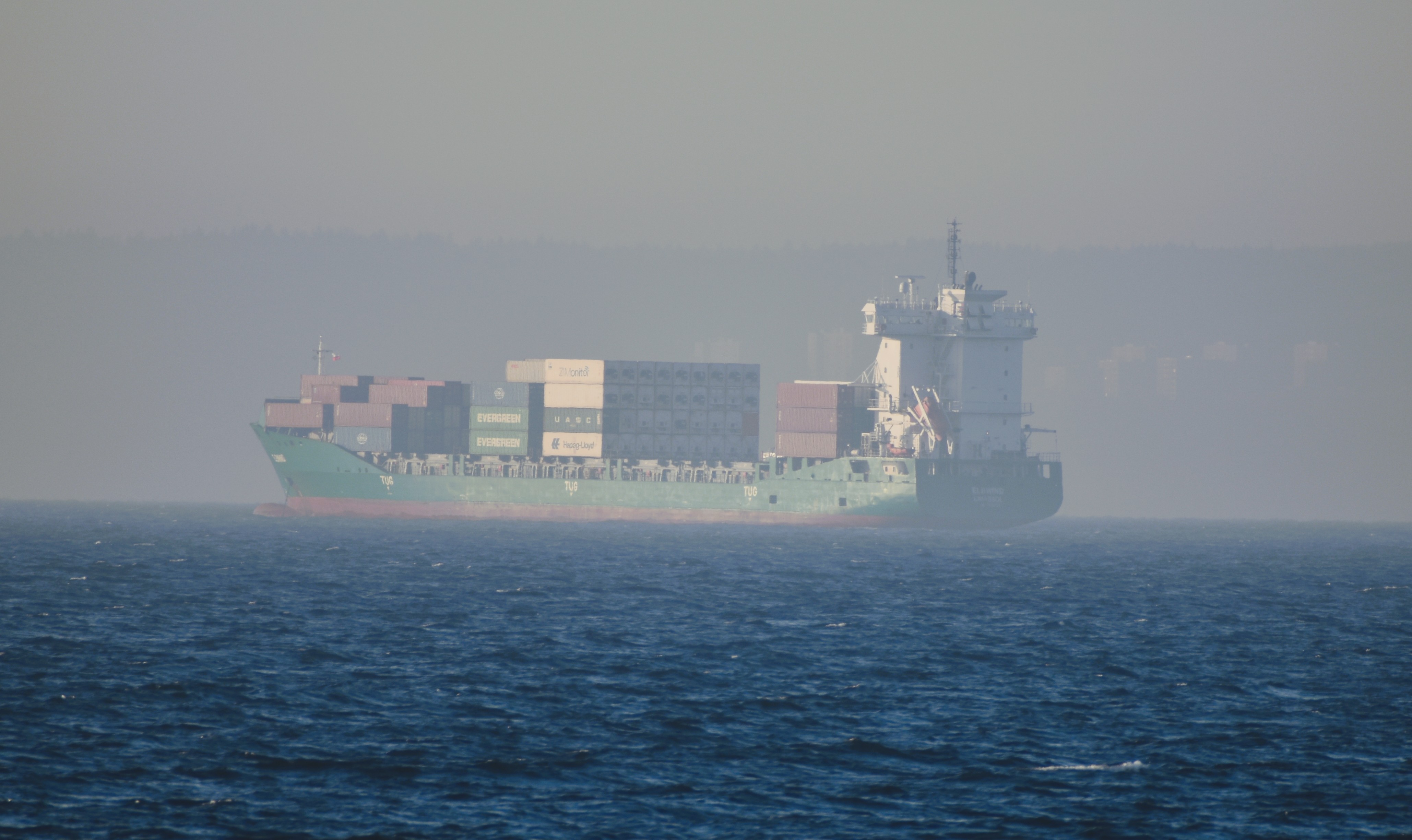
The pace of change in shipping is set by regulators. Since 2026 shipowners have had to account in the EU Emissions Trading System for 100 per cent of emissions from voyages between EU ports and half of the emissions from voyages to and from ports outside the Union. In parallel, the FuelEU Maritime regulation requires the greenhouse gas intensity of energy used on board to fall by 2 per cent from 2025, by 6 per cent from 2030 and by as much as 80 per cent by 2050. At the global level the situation is less clear. In October 2025 the International Maritime Organization postponed the adoption of its net-zero framework, and the spring 2026 session of its Marine Environment Protection Committee did not bring a decision.
Shipowners are therefore ordering vessels without knowing which fuel will win. Methanol, ammonia, biofuels and hydrogen differ in cost, technical requirements and availability, and none of them suits every type of ship. European companies also carry costs that their competitors elsewhere in the world do not. For ports the conclusion is practical: an owner will not invest in a ship running on a new fuel if there is nowhere to bunker it. Bunkering infrastructure and shore power are becoming as much a part of port competition as the depth of the fairway.
Shipyards: the market is coming to them
Each of these processes creates demand for ships and shipyard services. Offshore wind needs installation, service and cable-laying vessels. The Miecznik and Orka programmes together represent about PLN 35 billion in military orders, in the case of the submarines with an industrial cooperation package for Polish companies. Tightening emission standards in turn force the conversion of propulsion systems and the fitting of new power and automation systems on ships already in service.
Poland has the base for this: shipyards, design offices, maritime universities and steel structure manufacturers. What it lacks is a large fleet of its own. At the end of 2025 Polish shipowners operated 83 ships with a combined deadweight of 2.5 million tonnes. The opportunity therefore lies not in a return to mass construction of merchant ships but in specialisation: technically advanced vessels, repairs and conversions, and cooperation between shipyards, wind farm operators and the Polish Navy.
There is no shortage of orders. Remontowa Shipbuilding and PGZ Stocznia Wojenna are building nine naval vessels in parallel, with work secured until at least 2032. The barrier is people.
– We have plenty of orders, including ships for the Polish Navy, and we do not have skilled workers – admits Marcin Ryngwelski, CEO of PGZ Stocznia Wojenna, who has called on local governments to develop technical schools.
Energy arrives by sea
The Baltic has become Poland's main energy gateway. After its expansion, the LNG terminal in Świnoujście can receive 8.3 billion cubic metres of gas a year. Two floating terminals are being developed in the Gulf of Gdańsk, each with a capacity of 6.1 billion cubic metres. Together they will give Poland more than 20 billion cubic metres of regasification capacity, and with the Baltic Pipe gas pipeline, rated at 10 billion cubic metres, and interconnectors with neighbouring countries, import capacity will reach almost 50 billion cubic metres a year from 2030. That is clearly more than the country itself consumes, so Poland could become a gas supplier to its neighbours.
– FSRU 2 is an investment in the security of the state – stresses Wojciech Wrochna, Government Plenipotentiary for Strategic Energy Infrastructure.
The same is true of oil: Naftoport in Gdańsk handled 37.4 million tonnes of crude in 2025 and is building a sixth jetty. On top of that comes wind energy, which requires more than turbines. Wind farm output depends on the weather, so without grid expansion, energy storage and links with neighbouring systems, part of the power from the Baltic will go to waste.
The more energy arrives by sea, the more important it becomes to protect that infrastructure. A terminal, a wind farm export cable and a pipeline on the seabed are today targets whose damage would be felt by the entire economy.
The sea has its limits
The Baltic is one of the most heavily burdened seas in the world. In its latest holistic assessment, covering 2016-2021, the Helsinki Commission (HELCOM) identified eutrophication as one of the main pressures and found that many commercial fish stocks are in a particularly poor state. The same assessment estimates that achieving good environmental status by 2040 would be worth EUR 5.6 billion a year to the region's inhabitants.
That figure shows clearly that protecting the sea is part of the economic calculation, not its opposite. Wind farms cut emissions from power generation, but building them means underwater noise and interference with the habitats of birds and marine mammals. Growing ship traffic increases the risk of collisions and spills. Each of these investments requires a rigorous impact assessment, because fisheries, tourism and the quality of life on the coast depend on the state of the sea.
Baltic 2035: three scenarios
Over the next ten to fifteen years, three directions are possible.
- Integration and growth. The countries of the region connect their power grids, coordinate the protection of infrastructure and build joint supply chains for offshore wind. Poland, with the largest market and growing ports, is one of the main beneficiaries.
- Competition. Each country strengthens above all its own ports and industry. There is no shortage of investment, but it is duplicated, and the winners are those with lower costs, better infrastructure and easier access to capital.
- Elevated risk. Further cable incidents, cyberattacks and disruption to shipping push up the cost of insurance and financing. A growing share of budgets goes to protection instead of development.
The most likely outcome is a mix of all three: economic growth alongside permanently high security spending. For Poland this means that maritime policy can no longer be run separately from defence policy.
What Poland should do
The starting point should be a single maritime economy strategy with a horizon of at least 2040, covering ports, energy, shipyards and security, and not four separate documents from different ministries. Its content can be reduced to seven tasks:
- Connect the ports with the hinterland. Rail and intermodal terminals must keep pace with cargo growth, which in Gdańsk exceeds 10 per cent in 2026.
- Raise the share of domestic companies in offshore wind above today's 25-30 per cent, especially in second-phase projects and in the long-term servicing of wind farms.
- Focus shipyards on specialisation: vessels for offshore wind, warships, repairs and conversions to meet new emission standards.
- Build the capability to protect and rapidly repair subsea infrastructure, including uncrewed monitoring and access to cable ships, as OSW also recommends.
- Take Polish companies beyond Polish waters, into projects in the Baltic states and Scandinavia.
- Train the workforce: maritime and technical education should be planned together with an industry that is already reporting shortages of specialists.
- Measure success by value, not tonnes: count how much of every container handled and every turbine installed stays in the Polish economy.
Access to the sea is not enough
The Baltic has entered a period in which roles in Northern Europe's maritime economy are being divided for decades to come. Poland today holds assets it has never had before: a port that handles more than 80 million tonnes a year and is still growing, its first operating offshore wind farm, expanding gas terminals and a fleet modernisation programme.
It is not enough, however, to develop ports if the profit from cargo stays elsewhere. It is not enough to install turbines if they are built in foreign factories.
The question is no longer whether the sea is of strategic importance to Poland. The question is whether Poland has enough ambition and consistency to become one of the leaders of Northern Europe's new maritime economy.
Source: Gazeta Morska
Comments (0)
The discussion is moderated by the editors: a comment appears after review. Your e-mail address is not published.
Nobody has commented on this article yet.