Spain to launch new S-82 Narciso Monturiol submarine on October 3
On October 3 at 12:15, the Navantia shipyard in Cartagena will host the official launch ceremony of S-82 Narciso Monturiol, the second submarine of the S-80 Plus class, which is set to become the backbone of the Spanish Navy (Armada Española) for decades to come.
navy worldwide shipbuilding industry defense industry news01 october 2025 | 08:21 | Source: Gazeta Morska | Prepared by: Kamil Kusier | Print
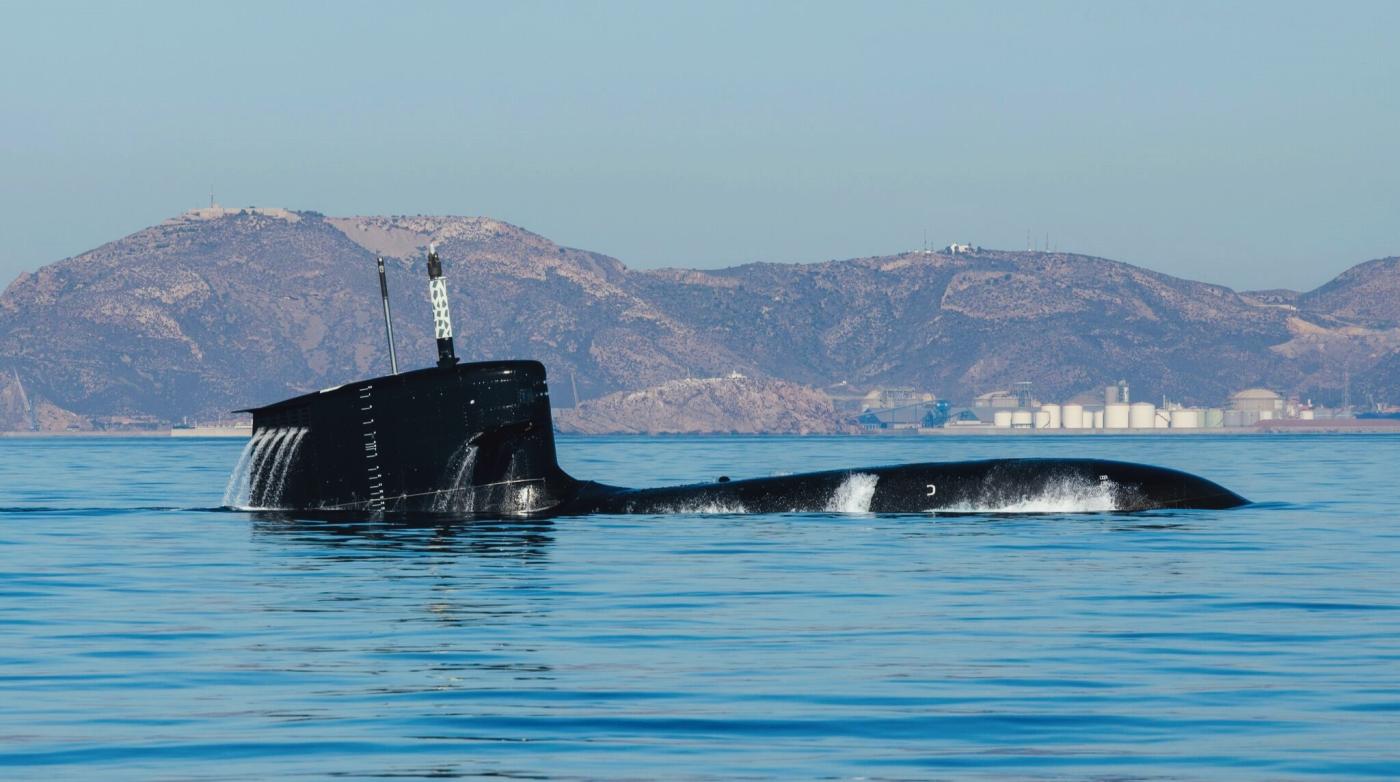
fot. Navantia
The event comes shortly after the launch of the F-111 Bonifaz, the lead ship of Spain’s new F-110 frigate program. Taken together, these milestones underscore the momentum and ambition of the Spanish naval and defense industry, which is now simultaneously delivering world-class surface and subsurface capabilities.
The S-80 program: ambitions and challenges
Launched in 2004, the S-80 program aims to provide Spain with full strategic autonomy in the design, construction, and sustainment of modern submarines.
Key innovations include:
- a fully indigenous design developed by Navantia,
- the integration of AIP (air independent propulsion) using BEST (bio-ethanol stealth technology), enabling multi-week submerged operations,
- NATO-standard combat systems, including the ability to deploy heavy torpedoes, anti-ship missiles, naval mines, and—potentially—Tomahawk cruise missiles.
The program comprises four units:
- S-81 Isaac Peral – commissioned in 2023
- S-82 Narciso Monturiol – launch scheduled for October 2025
- S-83 Cosme García – expected around 2026, with AIP installed from the start
- S-84 Mateo García de los Reyes – planned around 2028
Technical characteristics of the S-80 Plus
- Length: 81 m
- Beam: 7.3 m
- Displacement (submerged): ~2,965 tons
- Crew: 32 sailors + 8 special operations forces
- Armament: 6 × 533 mm torpedo tubes, capable of firing DM2A4 torpedoes, Harpoon missiles, naval mines, and potentially Tomahawk cruise missiles
- Range: ~8,000 km
- Propulsion: diesel-electric, with provision for AIP retrofitting
S-82: from dock to sea
The Narciso Monturiol has already passed critical safety milestones, including the “power up” test, which marked the activation of its main electrical systems.
After the launch ceremony, the submarine will undergo:
- harbor acceptance trials and shallow-water maneuvers,
- progressive diving tests,
- combat system validation,
- and eventually, a full sea trial campaign lasting more than a year.
Industrial and international impact
The S-80 program represents a technological landmark for Navantia and the Spanish defense sector, placing Spain among the select group of nations capable of independently designing and building modern submarines.
The program also reflects strong international cooperation:
- selected technologies were developed in collaboration with U.S. and Korean partners,
- the S-80 design has been offered abroad, including in Canada and Poland (as part of its Orka submarine program),
- it provides valuable knowledge transfer and safeguards high-value shipbuilding skills in Spain.
A new era for the Spanish Navy
The launch of S-82 Narciso Monturiol, together with the recent launch of F-111 Bonifaz, signals the modernization of the Spanish Navy on both the surface and subsurface fronts.
By fielding advanced platforms like the S-80 Plus, Spain strengthens its position as a capable NATO maritime power—ready not only to protect its own waters, but also to contribute to allied operations worldwide.
Buy us a coffee, and we’ll invest in great maritime journalism! Support Gazeta Morska and help us sail forward – click here!
Kamil Kusier
redaktor naczelny
comments
Add the first comment
see also
When two powers clash, Poland must be ready to act. Military security must be the priority
Commodore Przemysław Karaś appointed deputy commander of the Maritime Operations Centre - Naval Component Command
Mine countermeasure vessel Jaskółka begins sea acceptance trials
March 1: Remembering the “cursed soldiers”. A legacy that also resonates with today’s navy
Naval Academy cadets take military oath in Gdynia
French Navy expands global operations from the Pacific to the Red Sea
Navantia and Fincantieri deepen cooperation on the european patrol corvette programme
"Let everyone know we will prevail". Poland’s armed forces set strategic course for 2026-2039
“Army 500” and strategic transformation: Poland sets the course for long-term deterrence and allied readiness
Karol Nawrocki: “The strength of the republic lies in its armed forces”. Security requires national unity
ADVERTISEMENT
ADVERTISEMENT