Should the Polish Navy consider reviving a river flotilla?
As Europe faces increasing geopolitical volatility and hybrid threats near its borders, Poland must revisit old questions with new urgency. One such question is whether the Polish Navy should reintroduce a river flotilla—once a vital, now-forgotten component of national defense. Is this a case of military nostalgia, or a strategic necessity in an age of asymmetric warfare?
navy news inland shipping15 august 2025 | 09:22 | Source: Gazeta Morska | Prepared by: Kamil Kusier | Print
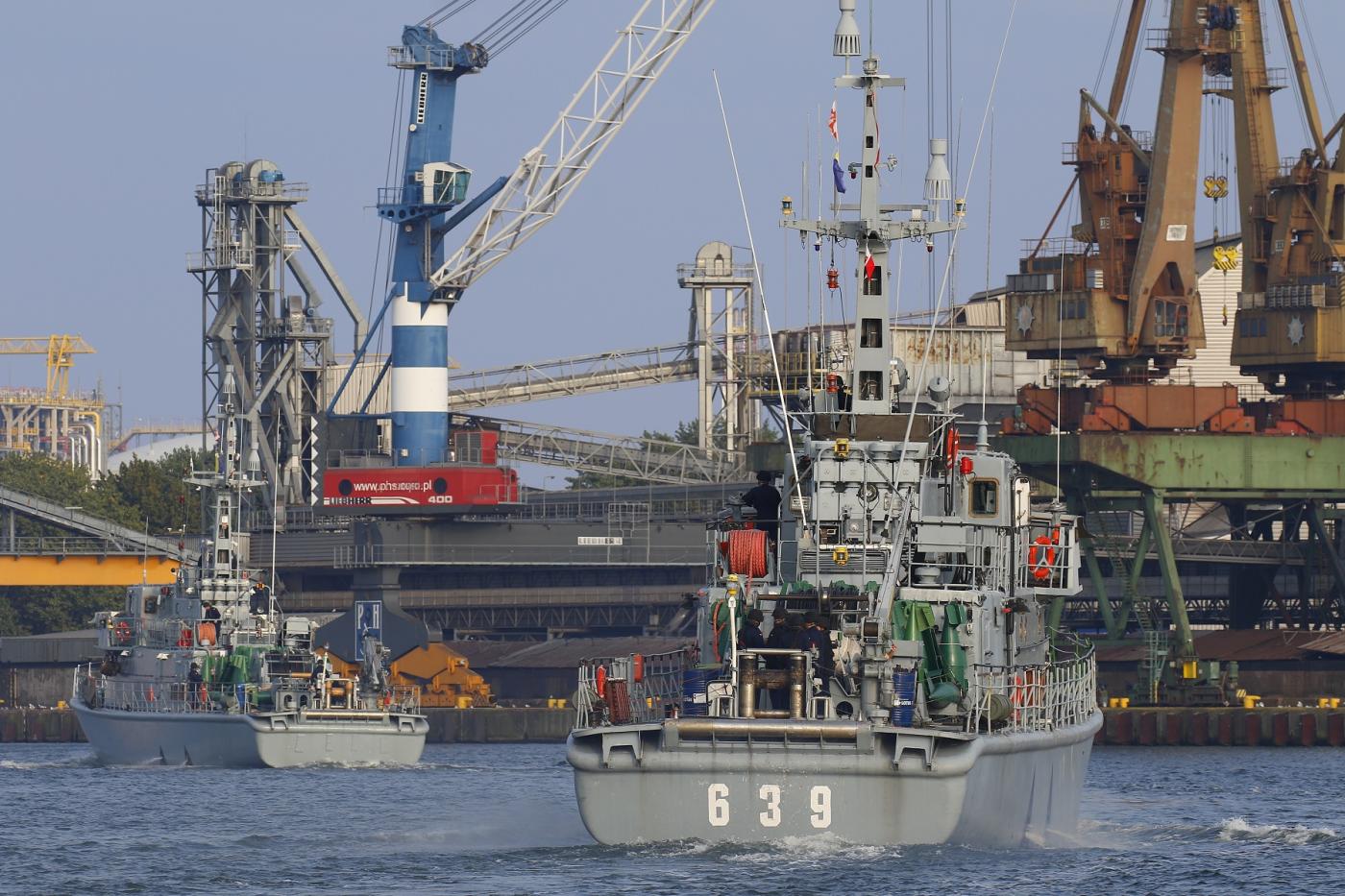
fot. 8FOW / Marynarka Wojenna RP
A historical force with modern lessons
Poland’s riverine forces have a notable legacy. After regaining independence in 1918, the country established the Pinsk Flotilla, a fleet operating in the marshlands of Polesia on the Pripyat River. Equipped with gunboats, minesweepers, and landing craft, it supported land forces during the Polish–Soviet War and guarded the vulnerable eastern border until the outbreak of World War II.
Post-war, a Vistula Flotilla existed within the Polish People's Army, but by the 1960s, riverine operations were seen as obsolete amid Cold War doctrines dominated by tanks, jets, and nuclear weapons. River warfare faded from strategic thinking.
Rivers in modern warfare
Russia’s invasion of Ukraine has upended many traditional assumptions about the battlefield. Rivers, once viewed as secondary features, have become chokepoints, natural barriers, and key logistical routes. The destruction of bridges, use of pontoon crossings, and river-based sabotage operations have all returned to relevance.
In this context, Poland’s river network—including the Vistula, Oder, Bug, and Warta—represents not only economic lifelines, but also potential theaters of military and security operations.
Why a river flotilla might make sense
Reintroducing a river flotilla wouldn’t necessarily mean replicating a historic formation like the Pinsk Flotilla. Instead, it could take the form of modular, mobile units capable of:
- Supporting land operations through river-based transport, fire support, and engineering;
- Securing critical infrastructure such as bridges, power plants, and river ports;
- Conducting counter-sabotage and ISR missions in hard-to-reach terrain;
- Assisting in crisis response, including disaster relief and border incidents.
Advocates argue that such capabilities could be decisive in early-phase conflict or hybrid scenarios. However, skeptics raise concerns about cost, vulnerability to modern anti-access weapons, and the risk of duplicating functions already assigned to land or air forces.
Alternatives: coast guard, river patrol, or enhanced border forces?
Rather than rebuilding a naval river flotilla from scratch, Poland could explore civil-military hybrid solutions.
One option is to establish a dedicated riverine guard, akin to a national coast or border guard, operating under the Ministry of the Interior but interoperable with military forces. Such a service could focus on internal security, border control, counter-smuggling, and infrastructure protection—while maintaining military readiness if required.
Another viable approach is to expand and modernize the Border Guard’s riverine capabilities. The Polish Border Guard already patrols key river sections along the country’s eastern and western borders. Equipping it with more capable craft, surveillance systems, and rapid-reaction teams could deliver similar results at a lower cost than maintaining a separate navy element.
Flexible deterrence over historical replication
The question is not whether Poland needs a flotilla like it had in 1930—but whether it needs riverine capacity fit for 21st-century threats. In an era of gray zone operations, sabotage, and hybrid warfare, rivers are no longer passive backdrops. They are active, exploitable domains.
Whether through a navy-led flotilla, a specialized riverine service, or enhanced border patrols, Poland would benefit from rethinking how it secures its inland waterways. Flexibility, speed, and inter-agency coordination will matter more than nostalgia.
As the battlefield evolves, so too must the idea of where and how it can begin—even along the quiet flow of a national river.
Buy us a coffee, and we’ll invest in great maritime journalism! Support Gazeta Morska and help us sail forward – click here!
Kamil Kusier
redaktor naczelny
comments
Add the first comment
see also
Navantia and Fincantieri deepen cooperation on the european patrol corvette programme
"Let everyone know we will prevail". Poland’s armed forces set strategic course for 2026-2039
“Army 500” and strategic transformation: Poland sets the course for long-term deterrence and allied readiness
Karol Nawrocki: “The strength of the republic lies in its armed forces”. Security requires national unity
Polish Navy Divers complete intensive winter under-ice training
Stadt Naval to deliver electric propulsion system for Polish rescue vessel Ratownik
Medical evacuation from Danish-flagged vessel Skoven off Łeba. Joint SAR operation in the Baltic Sea
Damen Shipyards and Blue Water Autonomy announce license for Liberty-class autonomous vessel for the U.S. Navy
ITS Virginio Fasan and USS Bulkeley conduct PASSEX in eastern Mediterranean
NATO strengthens operations in the north: alliance boosts Arctic presence
ADVERTISEMENT
ADVERTISEMENT