REPMUS/DYMS 2025: Portugal hosts the world’s largest unmanned maritime systems exercise
From 1 to 21 September 2025, the Atlantic waters off Tróia and Sesimbra are hosting REPMUS/DYMS 2025, the world’s largest multinational experimentation exercise focused on unmanned maritime systems. The event brings together navies, industry leaders, and research institutions to test cutting-edge autonomous technologies in realistic naval scenarios.
12 september 2025 | 13:43 | Source: Gazeta Morska | Prepared by: Kamil Kusier | Print
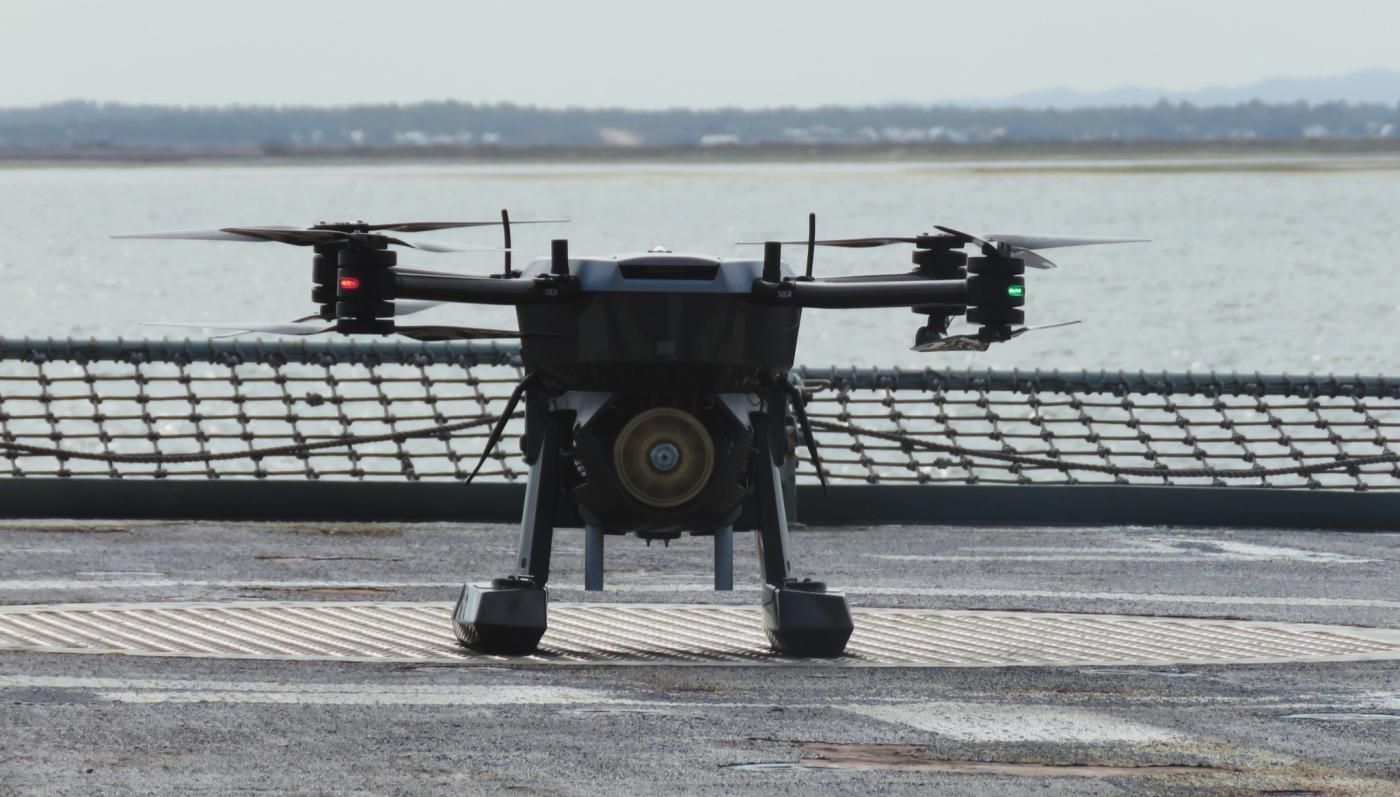
fot. Marinha Portuguesa
On 7 September, the Portuguese Navy deployed a task group from the Lisbon Naval Base (Alfeite), consisting of the frigate NRP D. Francisco de Almeida, the patrol vessel NRP Setúbal, and the offshore patrol vessel NRP Figueira da Foz, to actively join the exercise.
NATO allies driving the future of naval autonomy
This fifteenth edition of REPMUS involves over 2,000 participants from more than 20 NATO nations and partners, including Belgium, Canada, France, Germany, Greece, Italy, the Netherlands, Poland, Romania, Spain, Sweden, Turkey, the United Kingdom, the United States, and Australia. Conducted in parallel with NATO’s Dynamic Messenger (DYMS), the drills validate interoperability and operational application of unmanned systems alongside conventional fleets.
Poland’s rising role in unmanned systems
Poland is increasingly visible in the unmanned systems domain, with several companies and institutions contributing to NATO’s innovation ecosystem:
- PGZ Stocznia Wojenna – integration of unmanned systems on naval platforms;
- OBR CTM (PGZ) – sonar technologies, underwater warfare, and UUV/USV integration;
- WB Group (including Flytronic) – UAV development, C4ISR systems, tactical and mini UAVs;
- Advanced Protection Systems (APS) – counter-drone and radar technologies (SKYctrl, FIELDctrl) for critical infrastructure and naval bases;
- RADMOR S.A. – naval radar, communications, and sensor integration for autonomous platforms;
- Łukasiewicz – Institute of Aviation – UAV research, sensors, and control systems;
- ITWL – projects in navigation, guidance, and unmanned operations;
- Gdańsk University of Technology & Polish Naval Academy – R&D in maritime autonomy, hydrodynamics, and AI applications.
The Polish defense and technology sector, supported by a strong academic base, is positioning itself as an important contributor to NATO’s unmanned maritime initiatives.
Atlantic proving ground
REPMUS/DYMS 2025 reaffirms that unmanned maritime systems are no longer a futuristic concept but a rapidly maturing capability shaping NATO’s future naval operations. With Portugal at the center of innovation and allied navies – including Poland – bringing advanced technologies, the Atlantic becomes the proving ground of a new era in maritime security.
Buy us a coffee, and we’ll invest in great maritime journalism! Support Gazeta Morska and help us sail forward – click here!
Kamil Kusier
redaktor naczelny
comments
Add the first comment
see also
Polish National Sailing Team launches 2026 campaign with extended Garmin technical partnership
Navantia and Fincantieri deepen cooperation on the european patrol corvette programme
Galeon Yachts and Meyer Shank Racing: merging luxury yachts with motorsport expertise
"Let everyone know we will prevail". Poland’s armed forces set strategic course for 2026-2039
“Army 500” and strategic transformation: Poland sets the course for long-term deterrence and allied readiness
Medical evacuation from offshore vessel in the Baltic. Rescue 511 helicopter and m/s Huragan deployed
Karol Nawrocki: “The strength of the republic lies in its armed forces”. Security requires national unity
Polish Navy Divers complete intensive winter under-ice training
Human trafficking, money laundering, millions frozen. Successful operation by border guard and tax administration
Unmanned systems and naval firepower modules. WB Group showcases integrated capabilities at Enforce Tac 2026
ADVERTISEMENT
ADVERTISEMENT