







Polish Navy mine clearance divers complete Northern Challenge 2026 in Iceland
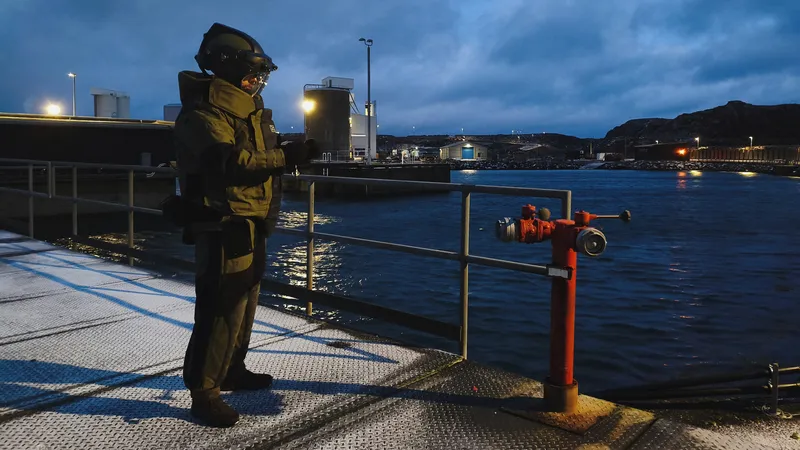
Mine clearance divers from the 12th Minesweeper Squadron of Poland's 8th Coastal Defence Flotilla have returned from Iceland, where they took part in the international exercise Northern Challenge 2026. Together with specialists from other countries, they trained to detect and neutralise improvised explosive devices on land and underwater.

In brief
Mine clearance divers from Poland's 8th Coastal Defence Flotilla trained to neutralise IEDs on land and underwater at Northern Challenge 2026 in Iceland, alongside 300 specialists from 19 countries.
Northern Challenge is a recurring exercise organised by the Icelandic Coast Guard near Keflavík, aimed primarily at explosive ordnance disposal (EOD) teams. It is one of the largest international training events in the field. This year's edition brought together about 300 specialists from 19 countries.
A threat that is hard to detect
Improvised explosive devices (IEDs) pose a serious threat to people, ships and critical infrastructure. They can take many forms, and the way they are built, triggered and hidden often makes them difficult to detect and neutralise. This is why they are handled by specially trained and equipped teams, such as the Mine Clearance Diver Group of the 8th Coastal Defence Flotilla, which is prepared to identify and neutralise dangerous objects, particularly underwater.
In the Baltic, this task is especially important. Mines and unexploded ordnance from both world wars still lie on the seabed, while the number of assets that need protection, from ports and terminals to pipelines, cables and offshore wind farms, keeps growing.
Vehicle bombs, drones and underwater charges
The Northern Challenge 2026 scenarios reflected situations soldiers may face in real operations. The Polish team dealt with explosives hidden in vehicles, booby traps and drones used to carry explosive payloads. They also practised handling dangerous devices placed in the water. Each episode required a correct assessment of the situation, identification of the threat and the choice of the right method of action.
Changing Icelandic weather added to the challenge, forcing participants to adapt their approach while maintaining the required safety standards. For the Polish divers, the most valuable episodes were those conducted on the water, the environment in which they operate most often.
– Tasks carried out in the water environment are particularly important for mine clearance divers. The exercise allowed us to verify procedures, gain experience and exchange knowledge with partners from other countries – said one of the Polish participants of the exercise.
The joint training also gave the team insight into solutions used by foreign units, including ways of responding to threats posed by uncrewed systems carrying explosives. The lessons learned will be used in planning future training in the 12th Minesweeper Squadron, particularly for scenarios and conditions that are difficult to recreate in Poland.
Source: Gazeta Morska
Comments (0)
The discussion is moderated by the editors: a comment appears after review. Your e-mail address is not published.
Nobody has commented on this article yet.