







Poland takes the lead in Baltic offshore wind as PGE Baltica nears completion of the sea's largest wind farm
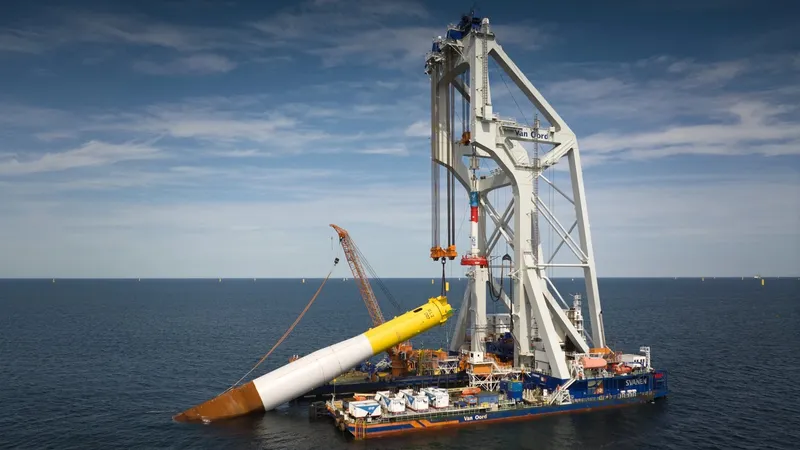
All 111 foundations are now in place on the Słupsk Bank for Baltica 2, the 1.5 GW offshore wind farm that is the largest project currently under construction in Poland and across the entire Baltic Sea basin. First power from the farm, built by PGE and Ørsted, is due in the second quarter of 2027. Together with Baltic Power, which in July became the first project to feed offshore wind electricity into the Polish grid, and the Bałtyk 2 and 3 wind farms now under construction, Poland is home to the Baltic's largest offshore wind construction site. Within two years, more than 4 GW of capacity will be operating in Polish waters.

In brief
Poland is leading offshore wind development in the Baltic Sea. PGE Baltica and Ørsted are completing the 1.5 GW Baltica 2, the largest wind farm under construction in the Baltic basin. This report reviews the state of offshore wind in Poland, Germany, Denmark, Sweden, Finland, Lithuania, Latvia and Estonia at the end of 2026.
A year ago, Polish offshore wind existed mainly in planning documents, environmental decisions and project schedules. Today, Baltic Power's turbines are turning, the T5 installation terminal is operating in Gdańsk, service bases are taking shape in Łeba and Ustka, and Poland's first offshore wind auction has awarded contracts for difference to a further 3.4 GW. Meanwhile, several other countries in the region are postponing projects or struggling with political and financial obstacles. We take stock of the Baltic offshore wind race at the end of 2026.
The Baltic target: 19.6 GW by 2030
The benchmark for the whole region remains the Marienborg Declaration. On 30 August 2022, the heads of government and energy ministers of eight Baltic Sea countries, Denmark, Germany, Poland, Sweden, Finland, Estonia, Latvia and Lithuania, committed to increasing offshore wind capacity in the Baltic from 2.8 GW at the time to 19.6 GW by 2030. The signatories estimated the sea's potential at around 93 GW.
When the declaration was signed, only Germany and Denmark had large-scale wind farms in the Baltic. Four years on, the regional map looks very different. Most new capacity is now being built in the Polish exclusive economic zone, where three large projects with a combined capacity of more than 4 GW are under construction in parallel.
Poland: from first power to regional leader in a single year
The breakthrough came on 10 July 2026, when the Baltic Power offshore wind farm, a joint venture between ORLEN Group (51 per cent) and Canada's Northland Power (49 per cent), delivered offshore wind electricity to the Polish grid for the first time. In October, installation of all 76 Vestas 15 MW turbines was completed, with some of the nacelles produced at Vestas' factory in Szczecin. The roughly 1.14 GW farm, located about 23 km off the coast near Choczewo and Łeba, will generate around 4 TWh of electricity a year. At the end of November, Poland's Ministry of Climate and Environment announced that the country's first offshore wind farm had been completed.
In parallel, Equinor and Polenergia are building the Bałtyk 2 and Bałtyk 3 wind farms, with a combined capacity of 1.44 GW. In early September, installation was completed for the foundations of all 100 turbines, each rated at 14.4 MW, and for the support structures of two offshore substations. The work involved Heerema's Thialf, one of the largest installation vessels in the world. By the end of the third quarter, 120 km of export cables had been laid, and construction of the base in Łeba that will house the wind farms' control centre was nearing completion. First power from Bałtyk 2 and 3 is expected in 2027, with full commercial operation in 2028.
Project | Developers | Capacity | Turbines | Status | Commissioning |
|---|---|---|---|---|---|
Baltic Power | ORLEN, Northland Power | c. 1.14 GW | 76 x 15 MW (Vestas) | completed, first power on 10 July 2026 | 2026 |
Baltica 2 | PGE, Ørsted | 1.5 GW | 107 x 14 MW | 111 foundations, substations and cables under installation | first power Q2 2027, full operation by end-2027 |
Bałtyk 2 and Bałtyk 3 | Equinor, Polenergia | 1.44 GW | 100 x 14.4 MW | 100 foundations, export cables | first power 2027, full operation 2028 |
Baltica 2: the Baltic's largest wind farm on the home stretch
The centrepiece of Poland's offshore programme is Baltica 2, developed as a joint venture between PGE and Denmark's Ørsted, which holds a 50 per cent stake in both Baltica 2 and Baltica 3. The 1,498 MW farm is being built on the Słupsk Bank, around 40 km offshore between Łeba and Ustka. According to PGE Baltica, it will supply around 2.5 million Polish households, and the company's CEO, Bartosz Fedurek, estimates that it will allow Poland to avoid burning around 1 billion cubic metres of natural gas a year.
Foundation installation began in May 2026. Speaking in Gdańsk at the time, PGE CEO Dariusz Lubera said the company was laying the foundations not only for a new wind farm but also for the energy mix of PGE and Poland. The campaign was completed on schedule, with 111 monopiles now on the seabed, 107 for turbines and four for offshore substations.
– This year we carried out the installation campaign for all the foundations very effectively and efficiently – said Bartosz Fedurek, CEO of PGE Baltica.
The four offshore substations are due to be installed by the end of the year, with export cable laying starting around the turn of the year. Turbines will follow in 2027. Baltica 2 will receive 107 Siemens Gamesa turbines rated at 14 MW, with a power boost function raising output to 15 MW. According to PGE Baltica, each turbine, including the tower, nacelle and blade, will stand more than 250 metres tall, higher than Warsaw's Palace of Culture and Science. Turbine transport and installation has been contracted to Cadeler.
Baltica 2 in numbers | |
|---|---|
Capacity | 1,498 MW |
Foundations | 111 (107 for turbines, 4 for substations) |
Turbines | 107 x 14 MW, with power boost to 15 MW |
Turbine height | more than 250 m |
Distance from shore | c. 40 km |
Households supplied | c. 2.5 million |
First power | Q2 2027 |
Full commercial operation | by end-2027 |
Installation port | T5 terminal, Gdańsk |
O&M base | Ustka |
Gdańsk and Ustka: PGE Baltica's onshore backbone
An offshore wind farm needs a port capable of handling components on a scale never before seen on Polish quaysides. On 30 October 2026, the T5 installation terminal was officially opened at the Port of Gdańsk, built as an extension of the Baltic Hub container terminal. The new facility covers 21.3 hectares and cost around PLN 1.2 billion, more than PLN 700 million of which came from Poland's National Recovery Plan. The terminal has been handed over to Elektrownia Wiatrowa Baltica-2, the company owned by PGE and Ørsted, and more than 107 turbines for Baltica 2 will set sail from its quays. At the opening, Prime Minister Donald Tusk said that locating the terminal in Poland would draw far more Polish subcontractors into offshore wind projects.
The second pillar of PGE Baltica's onshore infrastructure is Ustka. In June 2025, construction of an operations and maintenance base began in the western part of the port, on more than 2.3 hectares of land once occupied by the Korab fish processing plant. The general contractor is Pomeranian builder Korporacja Budowlana DORACO, and the facility is scheduled for completion in the fourth quarter of 2026. Service vessels will sail daily from Ustka carrying technicians to Baltica 2, and in future the base will also serve further PGE wind farms on the Słupsk Bank.
Baltica 3 and Baltica 9+: 3.9 GW by 2032
Baltica 2 is only the beginning of PGE's offshore programme. Under its strategy, the group plans to have 3.9 GW operating across three projects by 2032: Baltica 2, Baltica 3 (1,045 MW) and Baltica 9+ (1,325 MW). Together, the farms are expected to generate around 14 TWh a year, and PGE plans to invest around PLN 39 billion in offshore wind by 2035.
Baltica 3, developed with Ørsted like Baltica 2, has been undergoing reconfiguration since 2023, optimising its technical and economic assumptions in response to rising costs across the global offshore wind industry. The farm was originally due online around 2030. Procurement of key Tier 1 suppliers is now set to start in 2027, with first electricity expected by the end of 2032.
Baltica 9 is the result of one of the most notable moves in the market in recent years. Ahead of Poland's first offshore wind auction, PGE acquired RWE's Polish assets, including the environmental decision for site 44.E.1 and wind, meteorological and oceanographic measurement data, which according to PGE accelerated the project by several years. In December 2025, the 975 MW Baltica 9 secured a two-sided contract for difference, and PGE signed a conditional agreement with RWE to buy the neighbouring 350 MW FEW Baltic II project. Together, the two will form the Baltica 9+ complex with a capacity of around 1.3 GW.
PGE Baltica portfolio | Capacity | Partner | Planned commissioning |
|---|---|---|---|
Baltica 2 | 1,498 MW | Ørsted | 2027 |
Baltica 3 | 1,045 MW | Ørsted | by end-2032 |
Baltica 9+ | 1,325 MW | PGE alone | 2032 |
Total | c. 3.9 GW | c. 14 TWh a year |
The 2025 auction and the next rounds
Poland's first-ever offshore wind auction, concluded on 17 December 2025, awarded contracts for difference to three projects with a combined capacity of 3.435 GW: ORLEN's 900 MW Baltic East, PGE's 975 MW Baltica 9, and Polenergia and Equinor's 1,560 MW Bałtyk 1. First power from these projects is planned for around 2032.
The next auction is scheduled for 2027 and will cover around 4.5 GW. Deputy Climate and Environment Minister Sławomir Ćwik believes that at this pace the planned 18 GW by 2040 is achievable. Under Poland's updated National Energy and Climate Plan, offshore wind capacity is expected to reach 5.9 GW in 2030 and 17.9 GW in 2040. The ministry is preparing an amendment to the offshore wind act to introduce non-price criteria into auctions, including cybersecurity, the ability to deliver on time and supply chain resilience.
The share of Polish suppliers is also growing. Under a sector agreement, projects in the second phase of support should source at least 45 per cent from the Polish supply chain, while PGE and ORLEN are targeting 20-30 per cent for the first wave of wind farms. Direct suppliers to Polish offshore wind already include Tele-Fonika Kable and Crist Offshore, Smulders is producing secondary steel for Baltica 2's foundations at its Polish plants, and Vestas nacelles are being built in Szczecin.
Germany: Gennaker and Windanker strengthen the Baltic
Germany's offshore wind build-out has focused mainly on the North Sea, and at the end of 2025 only around 1.8 GW was installed in the German Baltic. The leading player there is Iberdrola, which has created a so-called Baltic Hub off the island of Rügen. It comprises the operating Wikinger farm (350 MW), the fully operational Baltic Eagle (476 MW) and Windanker (315 MW), whose installation was completed this year. Windanker, an investment of more than EUR 1 billion, is due to be commissioned in the fourth quarter of 2026.
Germany's largest Baltic project will be Skyborn Renewables' Gennaker. The 976.5 MW farm is being built around 15 km north of the Fischland-Darß-Zingst peninsula and will consist of 63 Siemens Gamesa turbines. In October 2026, the Pioneering Spirit installed the two offshore substations, Darß and Zingst, belonging to grid operator 50Hertz, and in September debt financing of around EUR 2.1 billion was closed. Foundations and turbines are due to be installed in 2027 and 2028, with full commercial operation at the end of 2028. According to 50Hertz, more than 3 GW of offshore capacity will be connected to the grid in the German Baltic by the end of the decade.
Denmark: Bornholm as an energy island for two nations
Denmark, a pioneer of offshore wind, is backing an unprecedented project in the Baltic. On 26 January 2026, at the North Sea Summit in Hamburg, the Danish and German energy ministers, Lars Aagaard and Katherina Reiche, signed an agreement on the Bornholm Energy Island in the presence of Chancellor Friedrich Merz and Prime Minister Mette Frederiksen. The project will connect 3 GW of offshore wind capacity to the grids of both countries via a hub on Bornholm, with the two nations sharing the cost of support for the wind farms. Katherina Reiche described the island as a flagship of European cooperation and a strategic project for common security.
The transmission infrastructure is being developed by Denmark's Energinet and Germany's 50Hertz, and the European Union has awarded it EUR 645.2 million from the Connecting Europe Facility. The next key step will be the tender for the wind farms themselves. The project marks Denmark's return to the game after a failed tender at the end of 2024 that attracted no bids, following which Copenhagen redesigned its auction rules to allow state support.
Sweden: defence concerns hold back the Baltic
The most difficult situation is in Sweden. In November 2024, the government rejected 13 wind farm projects in the Swedish exclusive economic zone in the Baltic, concluding that they would have an unacceptable impact on national defence. The armed forces argued that the turbines would hamper the country's ability to respond to incoming missiles and to detect submarines. On 29 October 2026, Sweden's Supreme Administrative Court upheld the refusal for the 1.4 GW Triton wind farm, planned around 30 km south of Ystad.
In July 2026, the government completed its review of all pending applications. Two projects were approved, including Skyborn's Fyrskeppet Offshore, with up to 2.8 GW in the southern Bothnian Sea, now the only approved project on Sweden's east coast. Eleven others were rejected. Stockholm has announced it will replace its open-door application system with auctions, while some developers, such as Eolus, have withdrawn from offshore wind altogether.
Finland: focus on the Gulf of Bothnia
Finland is developing offshore wind in the northern reaches of the Baltic. Its first large-scale open-sea project is set to be the Korsnäs wind farm, developed by state-owned Metsähallitus and Vattenfall. The farm, with a capacity of around 1.3 GW, is expected to generate 5 TWh a year and come online in the 2030s.
In November 2026, the Finnish government designated four areas for development in its exclusive economic zone in the Bothnian Sea and the Bothnian Bay. The first tender, covering the Bothnian Bay South area, could be launched in the first half of 2027. Finnish and Swedish companies are also studying the Baltic Sea Hydrogen Collector, an offshore hydrogen pipeline linking Finland, Sweden and Germany that would turn Baltic offshore wind into a hydrogen market.
Lithuania, Latvia and Estonia: ambitions ahead of delivery
The Baltic States have ambitious plans, but delivery keeps slipping. Lithuania plans two wind farms with a combined capacity of 1.4 GW. The first, the 700 MW Curonian Nord, located around 37 km off the coast, received a positive environmental impact assessment decision in July 2026. In October, however, state-controlled Ignitis, which acquired full ownership of the project from Ocean Winds, proposed postponing it, citing difficult market conditions and financing challenges. Lithuania's second offshore wind tender had already failed in October 2025, when only one bidder came forward. Even so, the European Investment Bank is supporting upgrades at the port of Klaipėda to serve offshore wind.
Latvia and Estonia are jointly developing the ELWIND project. The first public consultations, attended by 170 people, took place in November 2026, and an auction for the development rights is planned for 2029. The Latvian part of the project has an estimated potential of 500-1,000 MW. In February 2025, Estonia scrapped a planned offshore wind support auction worth up to EUR 2.6 billion, and the government has confirmed that no such auction will take place in 2026. Developers are pressing on regardless: Enefit Green has sold a 50 per cent stake in the Liivi Bay wind farm to Japan's Sumitomo.
Poland sets the pace in the Baltic
A look across the region makes it clear that Poland has become the engine of Baltic offshore wind. Once Baltica 2 and Bałtyk 2 and 3 are online, installed capacity in Polish waters will exceed 4 GW, more than twice the capacity installed in the German Baltic at the end of 2025. A further 3.4 GW already holds contracts for difference, and another 4.5 GW will go to auction in 2027.
Country | Status at end-2026 | Key Baltic projects | Next steps |
|---|---|---|---|
Poland | Baltic Power (c. 1.14 GW) completed, c. 2.9 GW under construction | Baltica 2, Bałtyk 2 and 3, Baltica 3, Baltica 9+, Baltic East, Bałtyk 1 | Baltica 2 first power Q2 2027, c. 4.5 GW auction in 2027 |
Germany | c. 1.8 GW in the Baltic (end-2025) | Windanker (315 MW), Gennaker (976.5 MW) | Windanker Q4 2026, Gennaker end-2028 |
Denmark | agreement with Germany on the energy island | Bornholm Energy Island (3 GW) | wind farm tender |
Sweden | 13 Baltic projects rejected on defence grounds | Fyrskeppet Offshore (up to 2.8 GW, Bothnian Sea) | transition to an auction system |
Finland | four EEZ areas designated | Korsnäs (c. 1.3 GW) | first tender in H1 2027 |
Lithuania | positive EIA for Curonian Nord | Curonian Nord (700 MW) | proposed postponement |
Latvia and Estonia | ELWIND public consultations | ELWIND, Liivi Bay | ELWIND auction in 2029 |
Poland's acceleration rests on a stable legal framework, the contract-for-difference support system and partnerships between national energy groups and experienced international players such as Ørsted, Equinor and Northland Power. For PGE Baltica, 2027 will be a defining year, bringing first power from Baltica 2, the launch of the Ustka base, turbine installation from Gdańsk's T5 terminal and the start of procurement for Baltica 3. The Polish Baltic, long seen as a promise, is becoming one of Europe's most important offshore wind construction sites.
Source: Gazeta Morska
Comments (0)
The discussion is moderated by the editors: a comment appears after review. Your e-mail address is not published.
Nobody has commented on this article yet.