







Poland's A26 submarines due from 2031 to 2038: how Saab's Orka win compares with five rival bids
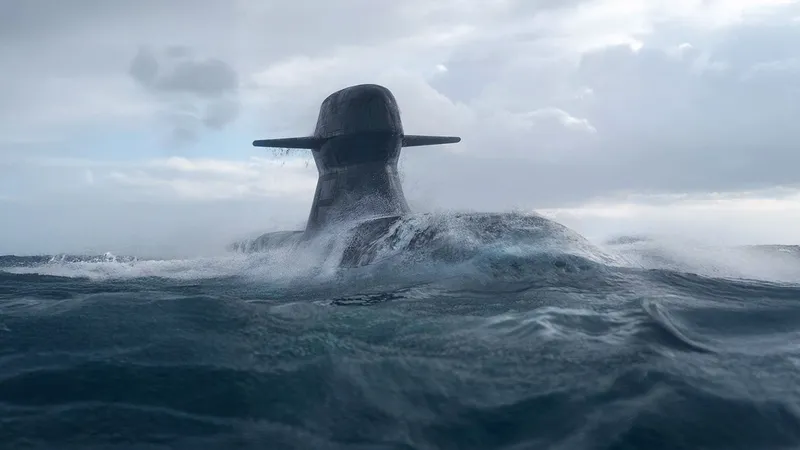
Poland expects to take delivery of the first of three Saab A26 submarines in 2031-2032, with the full series completed by 2038, under the Orka contract worth around SEK 47 billion (about EUR 4.3 billion). Work on the first Polish hull is under way at Saab Kockums in Karlskrona, Polish crews are training in Sweden, and the leased HMS Södermanland is bridging the capability gap. Saab secured the programme against bids from France, Germany, Italy, Spain and South Korea.

In brief
Poland expects its first Saab A26 submarine in 2031-2032 and all three by 2038. How Orka compares with bids from France, Germany, Italy, Spain and Korea.
Delivery window set by the Armament Agency
Poland's Armament Agency has fixed two milestones. Delivery of the first boat is to begin in 2031 and conclude in 2032, while 2038 is the final date for all three submarines and for reaching full operational capability. Saab describes deliveries as sequential and completed by 2038.
No official date has been published for the second hull. Defence24 has reported 2036, but that year does not appear in any released schedule. As 2038 is a ceiling rather than a fixed handover date, the third boat could arrive earlier.
The contracted timeline sits one year behind the first expectations. When Poland announced its selection of Saab in November 2025, Deputy Prime Minister and Defence Minister Władysław Kosiniak-Kamysz pointed to a first delivery in 2030. The final agreement spreads the handover of the lead boat across 2031 and 2032.
Building alongside Sweden's Blekinge class
The Polish boats are being built at the same Karlskrona yard as the two Blekinge-class submarines for the Swedish Navy. Steel for the Swedish programme was cut in 2015 and the keel of HMS Blekinge was laid in 2022. In October 2025 the Swedish Defence Materiel Administration (FMV) and Saab Kockums agreed a contract amendment placing delivery of both Swedish boats in 2031-2033.
The lead Swedish and Polish hulls are therefore set to progress almost in parallel. Swedish Defence Minister Pål Jonson has raised the option of reallocating the second Swedish hull, HMS Skåne, to become Poland's first boat. Saab is also expanding capacity, with Saab chief executive Micael Johansson committing the company to parallel production at more than one site.
Södermanland as the interim platform
Until the A26 boats arrive, Poland is leasing HMS Södermanland, an A17-class submarine dating from the late 1980s. A mid-life update in the early 2000s lengthened the hull and added Stirling air-independent propulsion. Polish submariners are training in Sweden, and Södermanland is set to conduct operational missions in the Baltic during the lease.
The interim solution keeps Polish submarine know-how alive. The Polish Navy's only operational boat, ORP Orzeł, a Kilo-class submarine built in the Soviet Union in 1985, marked 40 years under the Polish flag in April. Södermanland allows the submarine flotilla to keep crews trained and operationally current through the transition.
Torpedoes, a non-cruise missile and Polish industry
The weapons package covers light and heavy torpedoes. Saab is also integrating a missile which, according to Micael Johansson, is not a cruise missile. Poland's A26 boats will therefore not carry the long-range land-attack capability that several rival bidders put on the table.
On the industrial side, Saab has agreements with Polska Grupa Zbrojeniowa (PGZ) and WB Group. Polish companies are to take part in integrating combat electronics and unmanned systems, while a Polish shipyard is to handle maintenance, annual inspections and selected upgrades over the boats' service life.
Naval Group: Scorpène Evolved with MdCN
France's Naval Group offered the Scorpène Evolved in a strike configuration armed with MdCN naval cruise missiles, with a range of more than 1,000 km. The French bid placed deterrence and land-attack capability at its core and had earlier been extended to include a new variant of the Exocet anti-ship missile.
Industrially, Naval Group built its proposal around PGZ and PGZ Stocznia Wojenna, signing an industrial cooperation agreement in September 2025 and offering to bring Polish yards into modular construction of the boats.
TKMS: Type 212CD from the German-Norwegian programme
thyssenkrupp Marine Systems (TKMS) proposed the Type 212CD, developed jointly for Germany and Norway, which have ordered ten boats between them, six for Germany and four for Norway. The design combines a non-magnetic steel hull with fuel-cell air-independent propulsion, widely regarded as one of the most mature AIP systems available. Canada has since selected the Type 212CD for its own future submarine fleet.
TKMS offered a Polish maintenance hub modelled on the facility in Bergen, together with technology transfer in training, repair and upgrades, and pointed to its new Wismar yard as added production capacity. Norway proposed a used Ula-class submarine as an interim solution.
Fincantieri: U212 NFS plus midget submarines
Italy's Fincantieri bid the U212 NFS, a national evolution of the Type 212 with a higher level of automation. Fincantieri signed a memorandum of understanding with PGZ and positioned Poland as a co-producer for future export customers, with a share of long-term supply chain revenue.
In the final phase of the competition, Fincantieri added M23 C-series midget submarines to the package. Around 25 m long, with a crew of six and room for six divers or mine-laying specialists, they carry Murena bottom mines, 533 mm torpedoes, mini-torpedoes and loitering munitions, and were intended to support the larger boats rather than replace them.
Hanwha Ocean: KSS-III Batch 2 with vertical launch
Hanwha Ocean, teamed with HD Hyundai Heavy Industries, offered three KSS-III Batch 2 boats with air-independent propulsion. They were the largest and most strike-oriented submarines in the competition, fitted with vertical launch cells for land-attack missiles. Hanwha Ocean committed to delivering the first boat within six years and all three within eight years of contract signature.
The Korean package also included an interim solution, crew training with the Republic of Korea Navy, a training centre in Poland, transfer of maintenance, repair and overhaul know-how covering more than 3,000 catalogued components and a USD 100 million investment fund for the Polish maritime industry. Talks covered PGZ Stocznia Wojenna, Remontowa Shipbuilding, Nauta, WB Group and the Centre for Maritime Technology (OBR CTM).
Navantia: S-80 Plus with bioethanol AIP
Spain's Navantia proposed the S-80 Plus, whose lead boat, S-81 Isaac Peral, is already in Spanish Navy service. The design uses an air-independent propulsion system based on bioethanol reforming, enabling extended submerged endurance.
Navantia offered full financing of the purchase, immediate crew training and technology transfer, identified 58 Polish companies as potential suppliers and discussed with PGZ a regional submarine support hub in Poland.
First Polish hull under way in Karlskrona
On 15 October Deputy Defence Minister Cezary Tomczyk visited Saab Kockums in Karlskrona and confirmed that work on the first submarine for Poland had begun. At this stage the work covers orders and components, with steel cutting for the hull marking the formal start of construction.
After close to three decades of planning, Orka has moved firmly into delivery. The Polish Navy now has a clear path to three modern submarines, its crews are gaining hands-on experience at sea in Sweden, and Polish industry is taking a role in combat electronics, unmanned systems and through-life support.
Source: Gazeta Morska
Comments (0)
The discussion is moderated by the editors: a comment appears after review. Your e-mail address is not published.
Nobody has commented on this article yet.