Navantia and the Spanish Navy advance BHC programme, completing key preliminary design review
Navantia and the Spanish Navy are moving forward with the construction of two new coastal hydrographic vessels (BHC), following the execution order signed in December 2023. The programme has now passed a major milestone with the completion of the preliminary design review (PDR) — a crucial phase that validates whether the vessel design meets all operational, technical and budgetary requirements.
navy worldwide shipbuilding industry defense industry news14 november 2025 | 15:00 | Source: Gazeta Morska | Prepared by: Kamil Kusier | Print
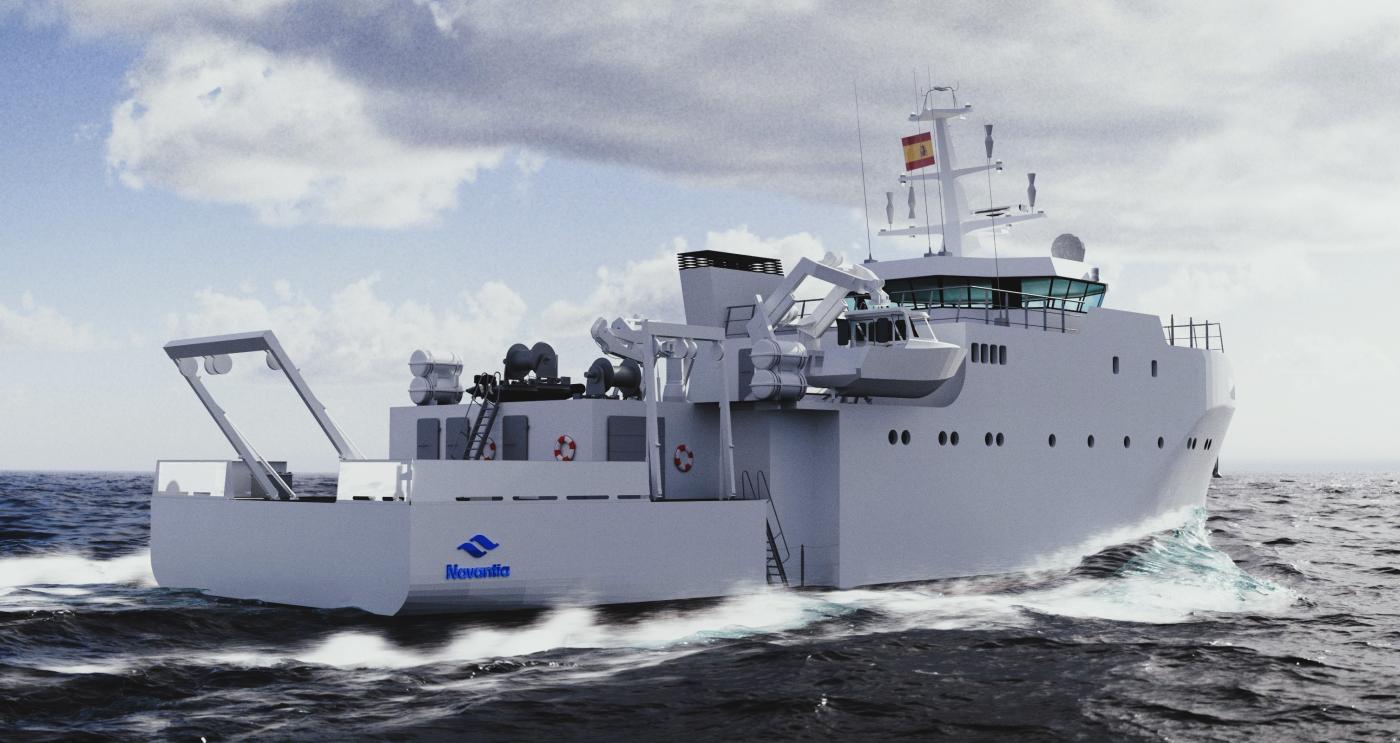
fot. Navantia
During the PDR, Navantia — working closely with the Hydrographic Flotilla Programme Office of DGAM and the Construction Inspection Office of the Cádiz Arsenal — conducted an extensive technical evaluation of the design documentation. The review confirmed the robustness of the main ship systems and outlined the actions required to progress into the next stages of development.
Next-generation hydrographic capabilities
The new BHC vessels will measure 50 metres in length, displace around 1,000 tonnes, and operate with a reduced crew of 30, enabled by a high degree of automation. They will offer an endurance of 3,000 nautical miles and up to 15 days of continuous operations in shallow waters. The design also incorporates the ability to operate on biofuels, aligning with broader decarbonisation goals across European fleets.
Key mission profiles will include:
- hydrographic surveying to support the production of Spain’s official nautical charts,
- providing environmental, geographic and meteorological data to the fleet,
- supporting the protection of underwater archaeological heritage,
- strengthening the operational capabilities of the Spanish Naval Hydrographic Institute, the future operator of the vessels.
A boost for the Cádiz shipbuilding cluster
The programme is being executed at Navantia’s San Fernando shipyard (Bay of Cádiz). With a duration of 51 months, the contract is expected to generate approximately 700 jobs and over 870,000 working hours, reinforcing the industrial and economic impact of naval shipbuilding in the region.
Once completed, the BHC units will significantly enhance Spain’s national hydrographic capability, improving navigational safety, maritime situational awareness and the country’s presence in scientific and environmental data collection.
Buy us a coffee, and we’ll invest in great maritime journalism! Support Gazeta Morska and help us sail forward – click here!
Kamil Kusier
redaktor naczelny
comments
Add the first comment
see also
Navantia and Fincantieri deepen cooperation on the european patrol corvette programme
"Let everyone know we will prevail". Poland’s armed forces set strategic course for 2026-2039
“Army 500” and strategic transformation: Poland sets the course for long-term deterrence and allied readiness
Karol Nawrocki: “The strength of the republic lies in its armed forces”. Security requires national unity
Polish Navy Divers complete intensive winter under-ice training
Stadt Naval to deliver electric propulsion system for Polish rescue vessel Ratownik
Medical evacuation from Danish-flagged vessel Skoven off Łeba. Joint SAR operation in the Baltic Sea
Damen Shipyards and Blue Water Autonomy announce license for Liberty-class autonomous vessel for the U.S. Navy
ITS Virginio Fasan and USS Bulkeley conduct PASSEX in eastern Mediterranean
NATO strengthens operations in the north: alliance boosts Arctic presence
ADVERTISEMENT
ADVERTISEMENT