







NATO mine countermeasures group trains with Latvian Navy after Riga port call
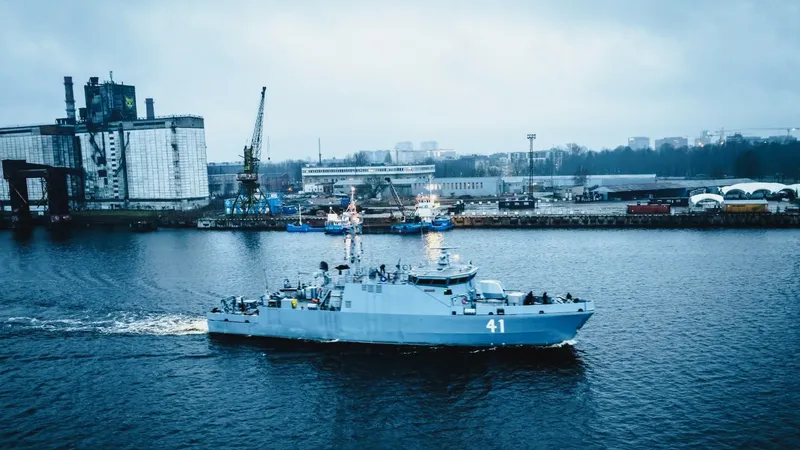
Poland in the first half of the year, Lithuania in the second, Latvia the year before. Command of Standing NATO Mine Countermeasures Group One (SNMCMG1) has rotated among the navies of the eastern Baltic, and the group itself has spent 2026 almost entirely in these waters. After a port visit to Riga that began on 20 November, its ships are now at sea for combined training with the Latvian Navy.

In brief
NATO's SNMCMG1 mine countermeasures group, led by Lithuania with Polish and Finnish minehunters, trains with the Latvian Navy after a port call in Riga.
Port call and talks in Riga
The group arrived in the Latvian capital on Friday 20 November. The programme included meetings between the group's commander, Commander Donatas Gečas of the Lithuanian Navy, the Chairman of Riga City Council, Viesturs Kleinbergs, and the Commander of the Latvian Navy, Captain Gvido Ļaudups. The agenda covered regional security and cooperation between NATO and Latvia's defence sector.
After leaving port, the group began combined exercises with Latvian Navy ships in the Baltic Sea, aimed at improving maritime cooperation, readiness and interoperability. Alongside its training programme, SNMCMG1 continues to contribute to Baltic Sentry, NATO's activity to protect undersea infrastructure in the region.
– Combined exercises allow us to improve our mutual cooperation – said Commander Donatas Gečas, Commander of SNMCMG1.
Commander Donatas Gečas added that under Lithuanian command the group is carrying out international mine-hunting operations that strengthen the ability to detect, identify and neutralise sea mines.
Lithuanian flagship with Polish and Finnish minehunters
Lithuania has led the group since the summer, with the command and support ship LNS Jotvingis as flagship. In November the flagship was operating with the Polish minehunter ORP Mewa and the Finnish minehunter FNS Purunpää. Before the visit to Latvia the group called at Turku in Finland, and in October it took part in NATO's Neptune Strike activity.
Commander Donatas Gečas served as the group's chief of staff from October 2024 to April 2025. He previously commanded the Lithuanian minehunter Kuršis and the Baltic Naval Squadron (BALTRON), the joint mine countermeasures formation of Lithuania, Latvia and Estonia.
The group's composition changes as ships rotate in and out. Two Royal Canadian Navy coastal defence vessels, HMCS Moncton and HMCS Edmonton, joined in the summer and returned to Halifax in early November.
Command passed from Latvia to Poland to Lithuania
The year began for SNMCMG1 in the same port. On 8 January, at a ceremony in Riga, Commander Jānis Auce of the Latvian Navy handed over command to Commander Kacper Sterne of the Polish Navy. For the next six months the Polish mine countermeasures command ship ORP Kontradmirał Xawery Czernicki served as flagship, hosting the multinational staff that planned and coordinated the group's work in the Baltic.
During the Polish-led period, seven ships from six nations operated in the group. It took part in Exercise MCM Baltic in March, led by the German Navy with nine nations involved, and in Open Spirit off the Latvian coast in May. Open Spirit brought together nearly 400 personnel from eight nations, nine diving teams and five autonomous underwater vehicle teams to clear ordnance left on the seabed from both world wars.
Poland handed over command at the end of June and has kept a ship in the group since, with ORP Mewa, a Kormoran II-class minehunter, assigned for the second half of the year.
A standing force since 1973
SNMCMG1 is one of NATO's four standing naval groups and reports to Allied Maritime Command. Its task is to give the Alliance an immediate mine countermeasures response. The group was activated in Ostend on 11 May 1973 as Standing Naval Force Channel and has carried its current name since 1 January 2005.
Historical ordnance remains a daily part of its work in the Baltic. Under Latvian command in 2025, the group detected 57 historical sea mines and four other pieces of unexploded ordnance. The protection of cables and pipelines on the seabed has since been added to that workload.
Source: Gazeta Morska
Comments (0)
The discussion is moderated by the editors: a comment appears after review. Your e-mail address is not published.
Nobody has commented on this article yet.