







Five nations, no waiting for NATO: Poland joins France's defence AI centre in Rennes
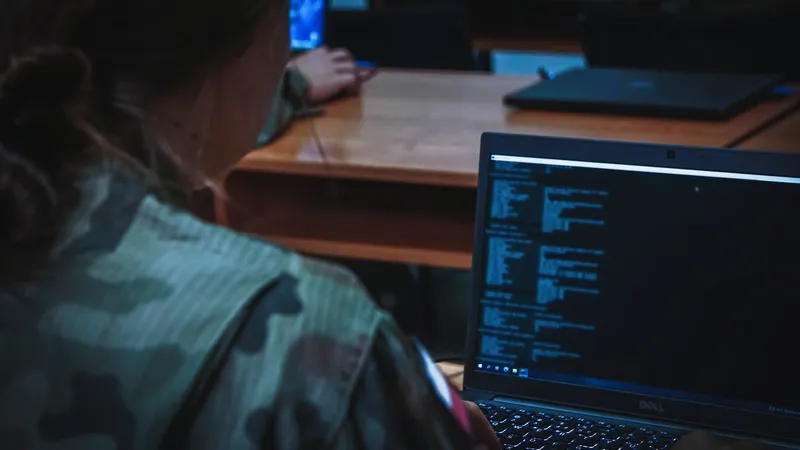
A NATO freeze on new centres of excellence did not stop it. France has launched the International Centre for Artificial Intelligence in Defence (ICAID) in Rennes with four partners at its side: Germany, Italy, Poland and Sweden. The centre is due to open in summer 2027 with at least 34 staff. For navies, industry and maritime administrations around the Baltic, the significance lies less in the building than in what will be written there: the common rules by which allied forces assess algorithms and decide whether to trust each other's data.

In brief
France, Germany, Italy, Poland and Sweden are setting up the ICAID defence AI centre in Rennes, due to open in summer 2027. What it means for Baltic security.
What was agreed in Rennes
France's defence ministry announced the project on 12 November and brought representatives of 22 nations to Rennes for an establishment conference on 19 and 20 November. During the conference Germany, Italy, Poland and Sweden announced their intention to contribute. With France, that makes five nations committed to setting up the centre, which remains open to other like-minded states.
The next step is to draft the founding texts with the participating nations. A second conference, planned for March 2027, is to formalise their commitments, and the centre is expected to be operational by the summer. Of the initial 34 civilian and military posts, 17 will be filled by France. The rest are for the partners.
Poland's position is carefully worded. Its Ministry of National Defence has declared support for the centre and readiness to take an active part in creating it. Warsaw will now receive a draft letter of intent, run it through national consultations and then join work on the founding documents and operating rules. The scope and terms of Polish participation are still to be agreed.
A standards body, not a software house
ICAID will not build AI services for the armed forces. That remains the job of national agencies, in France the Ministerial Agency for Artificial Intelligence in Defence (AMIAD), created after Paris adopted its defence AI strategy in March 2024. The centre's missions are the ones no nation can deliver alone: interoperability, shared best practice, lessons from operations, anticipating technological change and common frameworks for algorithm reliability and trustworthy AI.
A first taste came with the announcement itself. From 12 to 14 November eight teams, three of them from abroad, worked in Rennes on using military maps to improve frontline logistics.
The underlying problem was put plainly by the French officer who presented the project.
– We need assurances that the information used to make decisions is reliable – said Rear Admiral Vincent Sébastien, Deputy Director of AMIAD.
In a coalition operation a commander increasingly receives a picture that has already been processed by someone else's algorithm. Without knowing what data it was trained on, how it was tested and where it fails, the choice is between trusting it blindly and ignoring it. Common assessment methods are what make allied systems usable by anyone other than their owners.
Why a coalition of the willing
The project was first proposed as a NATO centre of excellence. With the Alliance not currently accrediting new centres, France chose to proceed with partners now and seek NATO accreditation later. It is a familiar pattern in European defence: a small group with the need and the resources builds the structure, then connects it to existing institutions.
The format suits the smaller founders. In a group of five, each voice carries more weight than in an organisation of thirty-two. The composition matters too. Germany and Italy bring large defence industries with strong naval sectors, Sweden brings Baltic expertise and a mature defence technology base, and Poland brings one of Europe's fastest-growing armed forces and direct experience of operating next to an active war.
Rennes was an obvious host. The Breton capital is the centre of French military cyber defence, surrounded by companies and universities working on digital technologies. It hosts European Cyber Week and the annual Conference on Artificial Intelligence for Defence, which this year ran dedicated sessions for the land, air and space, cyber and maritime domains.
What Poland brings
Poland does not arrive empty-handed. Its defence ministry adopted a departmental AI strategy running to 2039 in 2024, and in March 2025 Deputy Prime Minister Władysław Kosiniak-Kamysz announced the creation of the Artificial Intelligence Implementation Centre within the Cyberspace Defence Forces. Its five fields of work are cyber defence, intelligence analysis, autonomous combat systems, decision support for commanders and logistics optimisation.
That is close to a national mirror of what ICAID is meant to do internationally, and it gives Poland both an institutional counterpart and a pool of specialists to second to Rennes. Polish industry also supplies uncrewed systems that have been used in a real conflict across the country's eastern border. Knowledge of how algorithms behave under jamming and electronic attack is exactly what common standards need.
The Baltic as a test case
For the maritime sector the question is whether this cooperation reaches the sea. The Baltic is a data problem: satellite navigation interference, vessels sailing with transponders switched off, cables and pipelines to protect and a growing number of offshore wind farms. Building a reliable picture means fusing radar, AIS, satellite, drone and underwater sensor data in real time, across navies, border guards and maritime administrations of several states.
Without agreed rules for assessing and exchanging that data, each country sees only its own part of the water. With Sweden, Germany and Poland among the founders, Baltic use cases have a strong claim to a place in the centre's first projects. Shipyards integrating foreign combat systems and companies developing uncrewed surface and underwater vessels have an interest as well, because assessment standards written for the military tend to become procurement requirements.
Three things worth pressing for
The declarations made in Rennes open the door. Influence inside the centre will depend on contribution. The first test is people: a nation that fills a meaningful share of the international posts with its own officers and engineers helps write the methods instead of receiving them.
The second is subject matter. Founding documents are being drafted now, and that is the moment to put forward projects on the maritime picture in the Baltic, the resilience of algorithms to interference and the protection of critical infrastructure.
The third is industry and research. If universities and manufacturers from the participating countries are involved from the start, the benefits will not stop at headquarters level.
The rules for military AI are being written now. Five European nations have decided to write them together without waiting, and the Baltic states among them have good reason to make sure the sea is on the first page.
Source: Gazeta Morska
Comments (0)
The discussion is moderated by the editors: a comment appears after review. Your e-mail address is not published.
Nobody has commented on this article yet.