







Final section of MSC Baltic III pulled ashore as Canada nears end of Newfoundland wreck removal
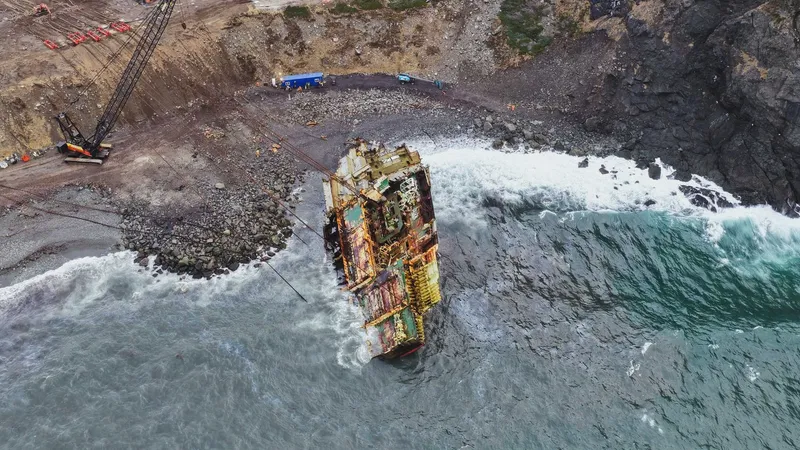
The final section of the wrecked containership MSC Baltic III has been pulled ashore at Cedar Cove on the west coast of Newfoundland. The Canadian Coast Guard announced the development on 27 November, more than 21 months after the 207-metre vessel lost power in a storm and ran aground. The stern section will now be cut up and removed, with site remediation scheduled for 2027.

In brief
The final section of the containership MSC Baltic III has been pulled ashore at Cedar Cove, Newfoundland. The MSC vessel lost power and ran aground in February 2025. All 472 containers, around 1,700 tonnes of fuel and 11,000 tonnes of hull have been removed, with site remediation planned for 2027.
The wreck removal has been one of the most demanding salvage operations off Canada's coast in recent years. All 472 containers, including those carrying dangerous goods, and around 1,700 tonnes of fuel have been removed from the vessel, along with approximately 11,000 tonnes of hull structure. Although the risk of pollution will remain until the last section of the wreck is dismantled, the threat to the marine environment has been greatly reduced.
Blackout and storm off Newfoundland
MSC Baltic III is a Liberian-flagged containership with a capacity of 2,478 TEU and a deadweight of 33,767 tonnes, owned by Mediterranean Shipping Company. The vessel was sailing from Montreal to Corner Brook, Newfoundland. On the morning of 15 February 2025, about 12 nautical miles from the entrance to the Bay of Islands, the crew issued a mayday call reporting a complete loss of power.
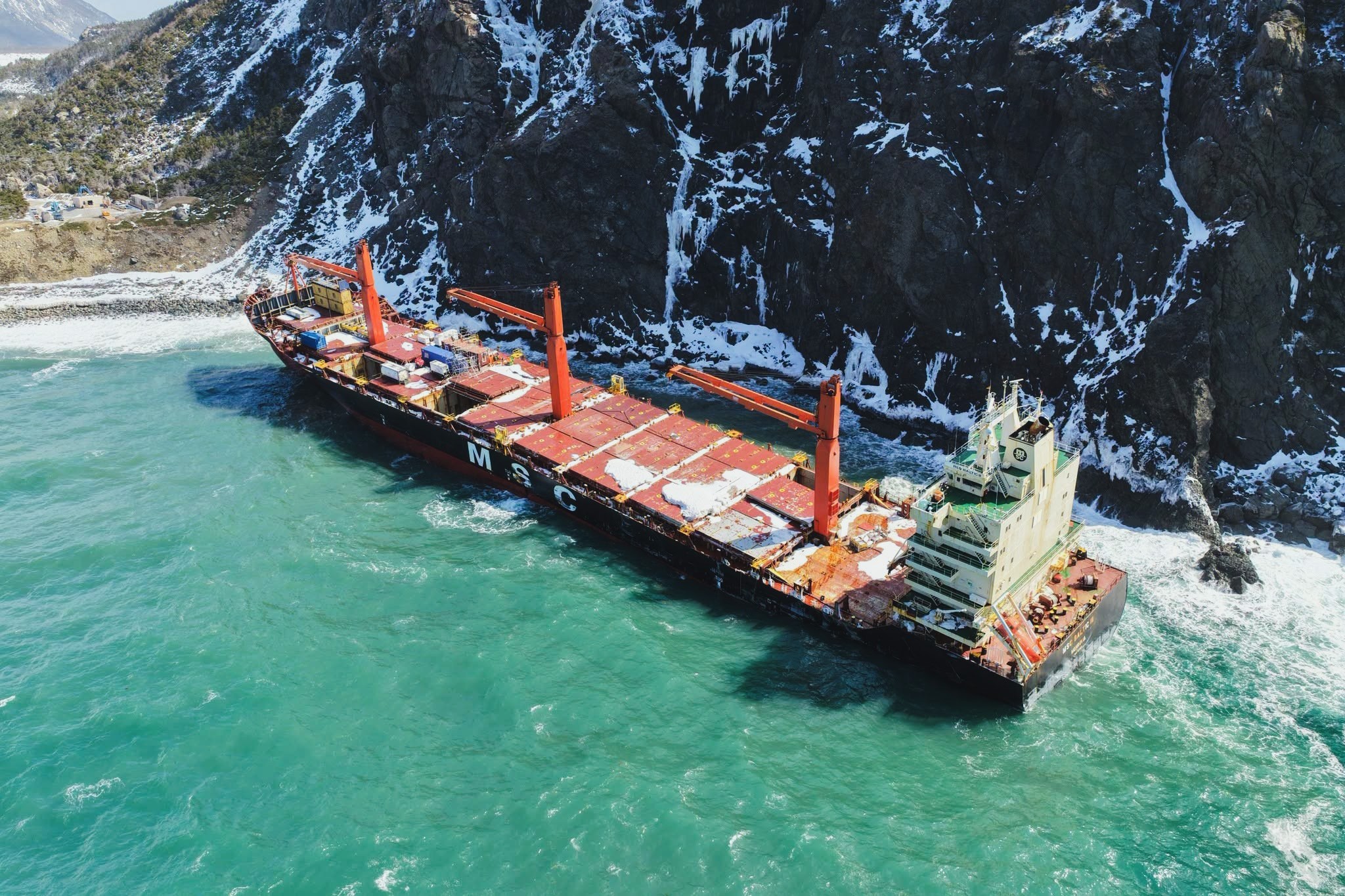
Conditions at sea were severe, with winds of up to 75 mph and waves reaching 6 metres. The crew was unable to secure an anchor, and the drifting ship ran aground in Wild Cove, west of Lark Harbour. The cove is also known as Cedar Cove.
All 20 crew members were airlifted to safety by a CH-149 Cormorant helicopter from the Royal Canadian Air Force's 103 Search and Rescue Squadron. A CC-130H Hercules aircraft and the Canadian Coast Guard icebreaker CCGS Henry Larsen also took part in the response. The cause of the power loss has not yet been publicly explained.
472 containers and 1,700 tonnes of fuel
The grounding breached the ship's hull, but its fuel tanks remained intact. The vessel was carrying around 470 containers, more than half of them empty. The Coast Guard established a two-nautical-mile safety zone around the ship and set up a staging area in Lark Harbour.
During the first months of the operation, winter storms and ice building up on the vessel and along the shoreline hampered access. Salvage crews gradually removed the containers, including those with dangerous goods, and pumped out the fuel. In total, around 1,700 tonnes of bulk fuel were removed from the wreck, along with residual fuel recovered during tank cleaning.
Four months of cutting the hull
The wreck removal was carried out by US-based Resolve Marine, contracted by the shipowner, with the Canadian Coast Guard reviewing the removal plan to ensure public safety and protection of the marine environment. The work involved cutting the hull into sections and pulling them ashore one by one, where they were further dismantled and taken away.
The bow section was the first to be brought ashore, and six priority heavy fuel oil tanks were removed from it. Crews then dismantled other parts of the ship, including the accommodation block. By early November, around 84 per cent of the wreck had been removed, with a portion of the stern remaining as the last piece underwater. By the end of the month, that too had been pulled ashore.
– This is a significant milestone in the MSC Baltic III wreck removal operation – the Canadian Coast Guard said in its fifty-first update on the operation.
Cedar Cove under constant monitoring
Despite the major progress, intermittent oil sheening is still observed in Cedar Cove, although it has decreased significantly since the bow section was removed. The risk of pollution will remain until the final portion of the wreck has been fully dismantled and removed from the shoreline.
The Canadian Coast Guard and Environment and Climate Change Canada are conducting shoreline, on-water and aerial pollution surveillance and monitoring, weather permitting. Once cutting and removal of the stern is complete, the operation will move into site remediation, scheduled to begin in 2027. The MSC Baltic III case shows how complex and lengthy the removal of large shipwrecks can be, particularly in the harsh weather of the North Atlantic.
Source: Gazeta Morska
Comments (0)
The discussion is moderated by the editors: a comment appears after review. Your e-mail address is not published.
Nobody has commented on this article yet.