









Energy Currents 2025. Europe at a critical point of transformation. Which path will Poland take?
Europe has reached a turning point in its energy transition – a process that is redefining the very foundations of the modern state: its security, competitiveness, and sovereignty. Against the backdrop of global tensions, disrupted supply chains, regulatory pressures, and accelerating digitalization, the question of how to shape future energy systems is no longer a purely technical one. It has acquired a geopolitical – even civilizational – dimension. Which path should Poland choose? That was the focus of our discussion during the Energy Currents 2025 debate.
In brief
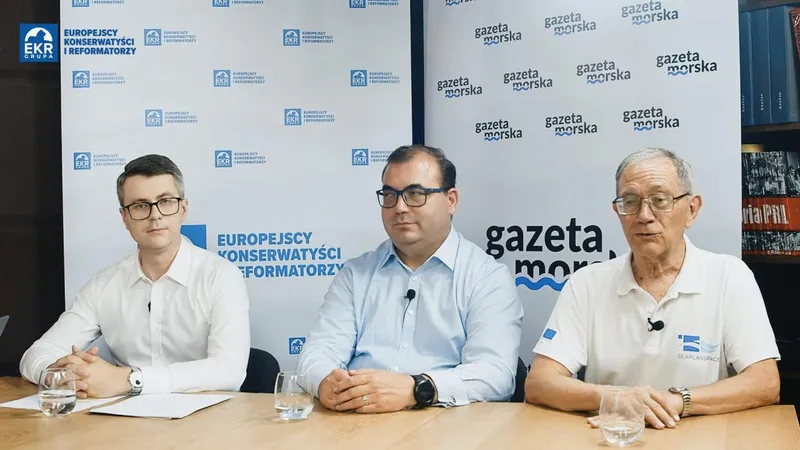
Energy sovereignty, maritime transmission infrastructure and technological realism framed the Energy Currents 2025 debate, joined by MEP Piotr Müller, Chamber of Commerce and Industry President Andrzej Jaworski and Prof. Marek Grzybowski, President of BSSC. Participants agreed that Poland must either shape its own energy future or follow someone else's script, with the Pomeranian region and its port infrastructure and offshore sector playing a decisive role. Nuclear power, both large-scale and in SMR form, was named alongside ports as a transmission hub and industrial competence centre. The debate was organized by KPH Group Sp. z o.o. with the European Conservatives and Reformists Group.
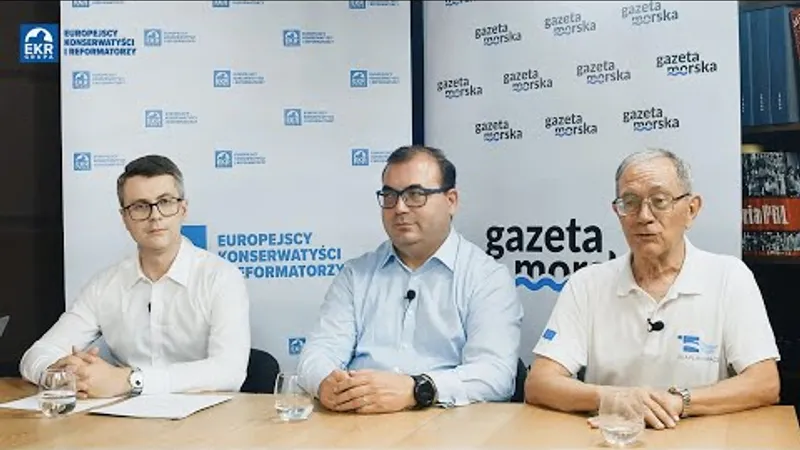
In this context, key concepts such as energy sovereignty, maritime transmission infrastructure, and technological realism are no longer just slogans – they have become essential conditions for effective state policy. These were the themes that resonated during the “Energy Currents 2025” debate, which brought together, among others, MEP Piotr Müller, representing the European Conservatives and Reformists Group in the European Parliament – co-organizer of the debate – Andrzej Jaworski, President of the Chamber of Commerce and Industry, and Prof. Marek Grzybowski, President of BSSC. Their shared message was clear: Poland must define which side of this transformation it wants to be on. It will either shape its own energy future or follow someone else’s script. The Pomeranian region, with its logistics base, port infrastructure, and growing offshore sector, can play a decisive role – provided that its potential is fully leveraged.
The debate showed that energy policy in Poland increasingly extends beyond questions of energy sources and fuel mix. It now embraces system resilience in times of crisis, technological dependencies on Asia, the quality of EU legislation, spatial planning, the role of technical education, and the growing influence of artificial intelligence on energy use and management. Within this complex landscape, nuclear power – both large-scale and in SMR form – is gaining importance, as are ports and coastal regions as transmission hubs and industrial competence centers.
Against the backdrop of EU energy policy, the tension between declared solidarity and the reality of national interests is becoming ever more apparent. Rising energy prices, concentration of renewable technology supply chains outside Europe, protracted project approval procedures, and the European Commission’s ambiguous stance on key issues all raise questions about the true direction of energy integration and Poland’s place within it.
The energy transition is no longer a vision of the future – it is happening here and now. Decisions taken today will determine not only the structure of Poland’s economy, but also the state’s ability to act under extreme conditions, its independence from external suppliers, and, in a broader sense, its ability to participate as an active player in Europe’s new energy order.
The “Energy Currents 2025” debate was organized by KPH Group Sp. z o.o. – publisher of Gazeta Morska and Daily Mare – together with the European Conservatives and Reformists Group (ECR).
The program was financed with the support of the European Conservatives and Reformists Group in the European Parliament.
Source: Gazeta Morska / Grupa Europejskich Konserwatystów i Reformatorów w Parlamencie Europejskim · Compiled by: Kamil Kusier
Related articles
 Energy and offshore Energy Currents 2025: key innovations and strategic dilemmas in Europe’s energy transition
 Energy and offshore Orlen boosts gas output in Norway. Ormen Lange expansion strengthens supply security
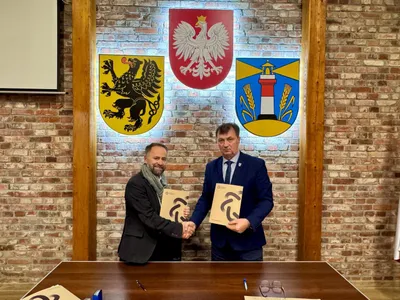 Energy and offshore Słajszewo to get a new beach road around Poland’s first nuclear plant site before summer 2027
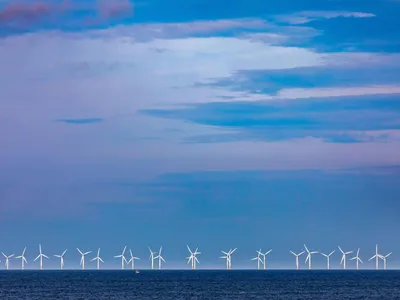 Energy and offshore Orlen Neptun deploys V-LiDAR buoys at Baltic West ahead of Poland's 2027 offshore wind auction
 Energy and offshore Equinor takes over Bałtyk 2 and 3 O&M base in Łeba. Port to serve 1.44 GW of offshore wind for 30 years
 Energy and offshore Energa renames Gdańsk gas plant company as foundations for 6,000-tonne turbine and boiler are laid
Comments (0)
The discussion is moderated by the editors: a comment appears after review. Your e-mail address is not published.
Nobody has commented on this article yet.