







Bulk carrier Miro G stranded on a French beach as salvors race weather and falling tides
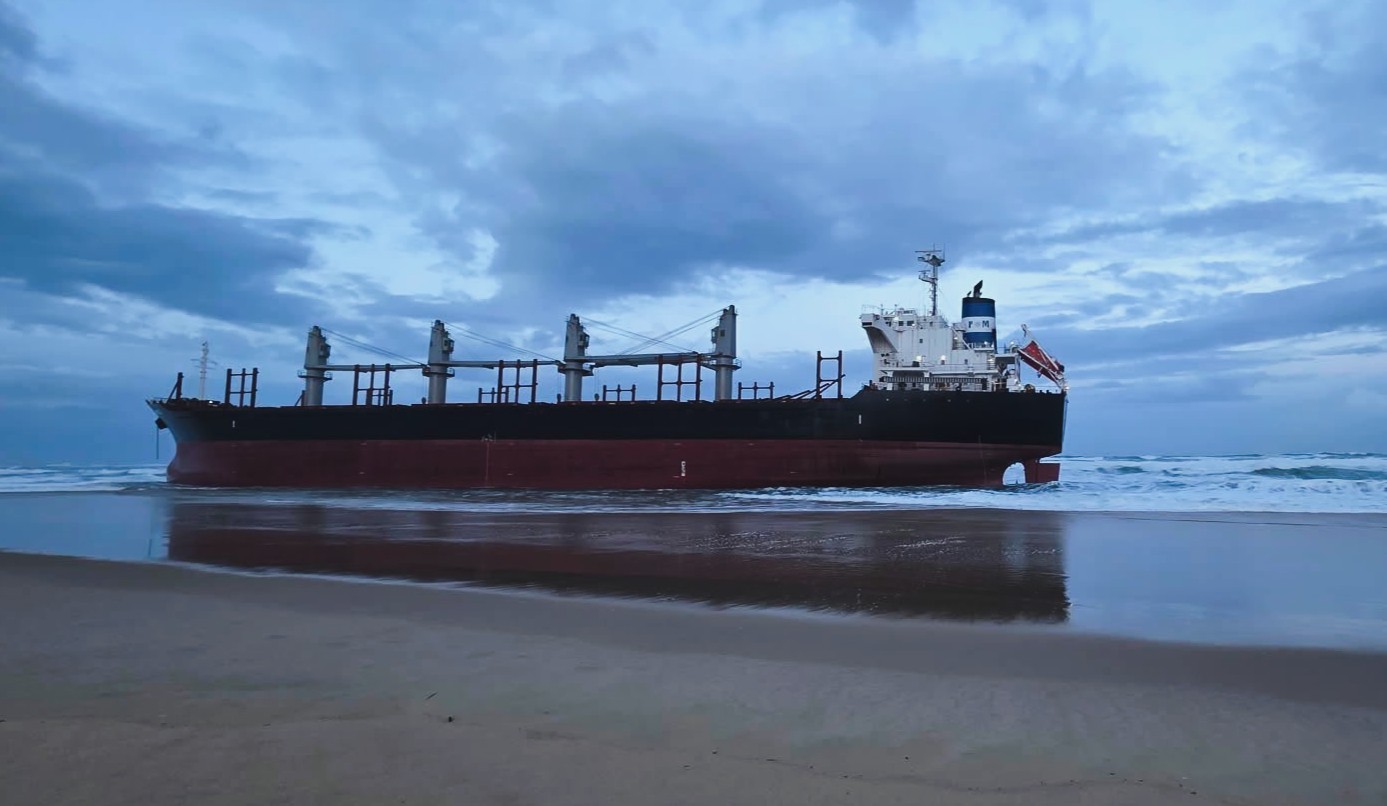
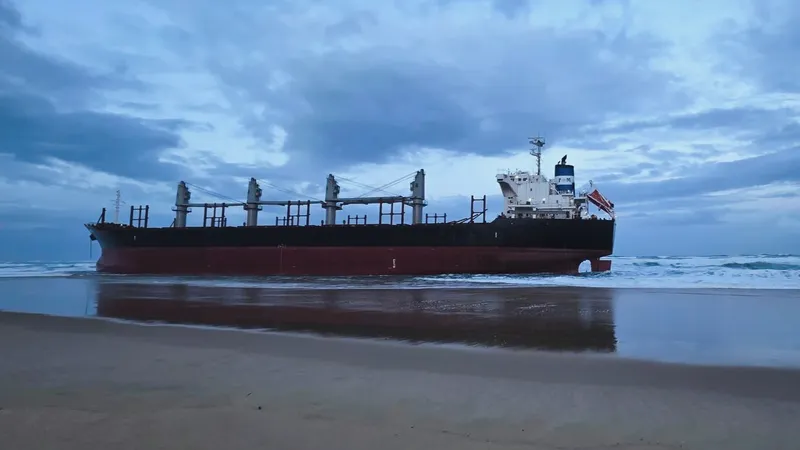
The Maltese-flagged bulk carrier Miro G has been aground off the Landes coast in south-western France since the early hours of Friday. Nineteen crew members were airlifted to safety, while the master and two others remain on board. On Saturday the emergency tug Abeille Bretagne was due to arrive on scene, but refloating the 169-metre vessel is proving far from simple: the water is too shallow, the ship's main generators are down and tidal ranges are decreasing. French authorities say success cannot be guaranteed.
In brief
The 169-metre bulk carrier Miro G has been aground off France's Landes coast since Friday. Nineteen crew were airlifted and the tug Abeille Bretagne is on its way. Why refloating is so difficult.
Empty holds, bound for Rouen: the voyage that ended on the sand
Miro G is a bulk carrier built in 2011, 169 metres long and 27 metres wide, sailing under the Maltese flag and operated by Prelude Marine, according to AFP. The vessel was in ballast and bound for Rouen. According to ship-tracking firm Kpler, it left Egypt on 13 October and discharged a cargo of urea in early November at Errenteria, near San Sebastián in Spain, and at Bayonne in France.
A night when the anchor did not hold
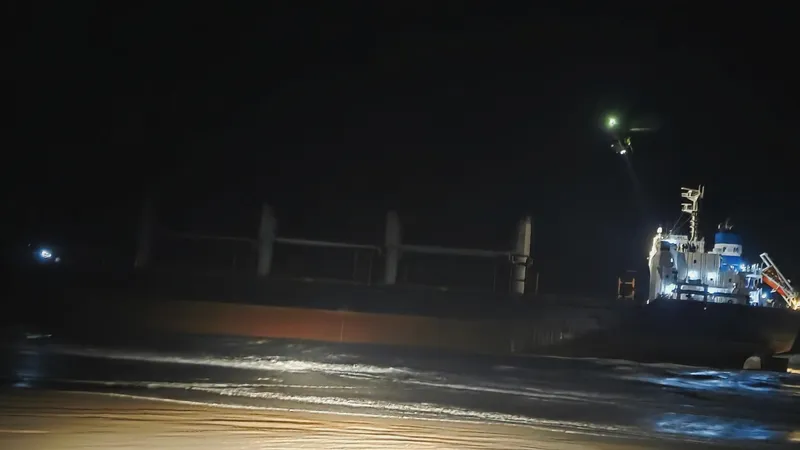
The trouble began on the evening of Thursday, 19 November. The crew alerted the CROSS Étel rescue coordination centre that the ship was having difficulty manoeuvring in heavy weather and could not counter the swell and cross winds. It attempted an emergency anchoring about 1.8 nautical miles, or 3 km, off Lit-et-Mixe. With gusts reaching 48 knots, about 90 km/h, the anchor dragged, and shortly after midnight the vessel grounded off the beach at Cap de l'Homy. A witness reported seeing distress flares.
The master requested the evacuation of the crew. A French Air and Space Force helicopter from the Cazaux air base winched off 19 seafarers, who were taken in by the Red Cross in nearby Saint-Julien-en-Born. No one was seriously hurt. The master and two crew members stayed on board to maintain radio contact and assist the authorities.
– The hull is touching the bottom. The aim of the operations now is to consider refloating this vessel – said Commander Laurent Falhun, spokesperson for the Atlantic maritime prefecture.
He described the conditions at the time as very bad, with strong winds and swells of five to six metres at sea.
Two tugs, two navies and a team winched onto the deck
The maritime prefect for the Atlantic activated level 3 of the ORSEC maritime emergency plan and the Biscay Plan, a Franco-Spanish cooperation mechanism for maritime emergencies. Under it, the Spanish rescue tug Sar Gavia sailed from Bilbao on Thursday evening.
On Friday, a French Navy evaluation and intervention team was winched on board from a Dauphin helicopter based at La Rochelle to assess the condition of the ship. The emergency towing vessel Abeille Bretagne left Brest and, according to the prefecture's update of Saturday, 21 November, was expected on scene at the end of the day. The operation is being run by the maritime prefecture in coordination with the prefecture of the Landes department.
Why 169 metres of steel cannot simply be pulled off
Saturday's update from the prefecture sets out why the vessel cannot simply be pulled off.
Weight. To float free, the ship has to be lightened by pumping seawater out of its ballast tanks. Both main generators are unavailable, so specialists are working to restore a temporary power supply to the pumps.
Depth. Abeille Bretagne cannot come closer than half a nautical mile, about 900 metres, to the stranded vessel. A Kevlar towline about 1,000 metres long has therefore been brought from La Pallice, the port of La Rochelle. Passing it to the ship in rough seas will be difficult and will require a small boat.
Weather. Wind and swell are the decisive factors, and the authorities are waiting for a suitable window.
Tides. Tidal coefficients are falling in the coming days, which means less water under the hull at high tide, precisely when a refloating attempt has to be made.
The prefecture says the attempt will be made at the first favourable opportunity once all the conditions are met. It also warns that success cannot be guaranteed and that a longer operation may be needed if the ship cannot be refloated in the coming days. The tug may not be able to approach the vessel immediately on arrival.
More than 100 tonnes of fuel off a tourist coast
The holds are empty, but the ship still carries just over 100 tonnes of diesel in its tanks for propulsion, according to the prefecture's spokesperson. That is the main threat to the Landes coast, known for its long sandy beaches and surf. A French Navy Falcon 50 surveillance aircraft flew over the vessel and detected no pollution around it. Officials have warned of a pollution risk should fuel leak, but none has been observed so far.
On shore, the mayor has closed access to the beach for safety reasons after dozens of onlookers gathered to watch.
The shadow of TK Bremen
France has seen how such incidents can end. In December 2011, the cargo ship TK Bremen was driven onto a beach in Brittany's Morbihan department after sailing in a storm. It was too badly damaged to be saved and was dismantled where it lay. And in 1976, as the regional daily Sud Ouest recalls, a single storm grounded three ships on the Landes coast.
The grounding has also revived a debate about emergency towing cover in the Bay of Biscay. The association Mor Glaz points out that a deep-sea emergency tug was withdrawn from La Rochelle 15 years ago, which in its view left a large part of the bay without protection. This time, Abeille Bretagne had to sail all the way from Brest.
Back to sea or broken up on the beach
Much depends on the next few days. If the pumps can be powered, the towline passed and the weather holds, an attempt could be made at high tide. If not, falling tides will make the task harder, and Miro G could remain on the sand for much longer. The cause of the manoeuvring problems that led to the grounding has not been made public.
Source: Gazeta Morska
Comments (0)
The discussion is moderated by the editors: a comment appears after review. Your e-mail address is not published.
Nobody has commented on this article yet.