







Baltic Power ramps up as Orlen prepares Poland's first offshore wind farm for commercial operation
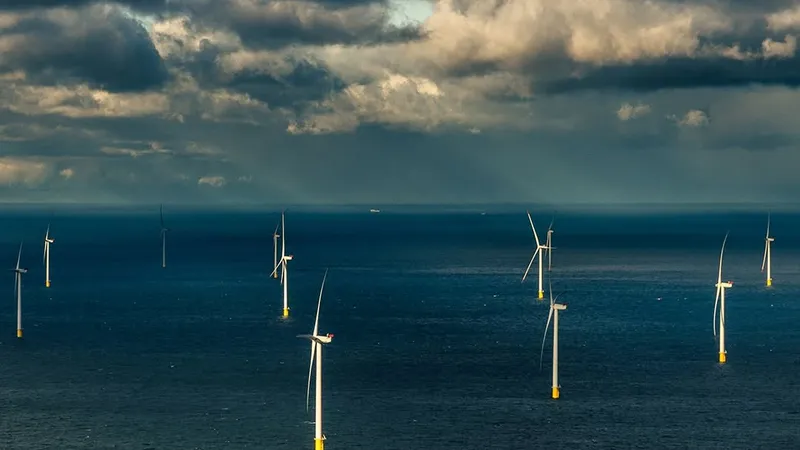
All 76 turbines at Baltic Power, Poland's first offshore wind farm, are standing in the Baltic Sea, and the 1,140 MW project jointly owned by Orlen and Canada's Northland Power is in the final stage of testing before commercial operation, which the partners expect to start in 2026. The farm has been feeding electricity into the Polish grid since July. On Wednesday, Orlen marked the moment with a social media post describing an exceptional herd of 76 individuals that feel most at home in the wind and are just getting into their stride. The Polish energy group is meanwhile preparing its second offshore project, Baltic East, which won the country's first offshore wind auction in December 2025.

In brief
All 76 Vestas 15 MW turbines are now standing at Baltic Power, Poland's first offshore wind farm, jointly owned by Orlen and Northland Power. The 1.14 GW project has supplied power to the grid since July 2026 and is completing final tests before commercial operation. We look at the construction, the Łeba O&M base and Orlen's next project, Baltic East.
A herd of 76 turbines off the Polish coast
Baltic Power covers an area of around 130 km² roughly 23 km off the coast near Choczewo and Łeba in northern Poland. The wind farm comprises 76 Vestas V236 turbines rated at 15 MW each, giving a total installed capacity of 1,140 MW. It is one of the first two projects in the world to deploy turbines of this type.
Orlen holds a 51% stake in the project and Northland Power owns the remaining 49%. The partners signed their cooperation agreement in 2021, the same year the project was awarded a 25-year contract for difference by Poland's Energy Regulatory Office. The contract secures stable revenues from the sale of electricity over the life of the support scheme.
Once fully operational, Baltic Power is expected to generate around 4 TWh of electricity a year. That is enough to supply more than 1.5 million Polish households and is equivalent to about 3% of the country's current power demand. The farm is also expected to cut carbon dioxide emissions by around 2.8 million tonnes annually.
From the first monopile to first power
Offshore construction began in February 2025, when a fleet of 11 specialised vessels mobilised to install the foundations. By February 2026, all 78 monopiles were in place on the seabed, supporting the 76 turbines and two offshore substations. The installation of all 76 transition pieces, which connect the foundations to the turbine towers, was completed the following month.
More than 80 vessels and around 4,500 people, including crews, technicians, contractors and members of the Baltic Power team, were involved in the installation campaign. The turbines were installed by Danish contractor Cadeler using its vessels Wind Osprey and Wind Mover, with components loaded out from the port of Rønne on the Danish island of Bornholm.
The decisive moment came on 10 July 2026, when the first turbines passed the required tests and delivered electricity from offshore wind to Poland's national grid for the first time in history. At that point, 54 turbines had been installed and all inter-array and export cables were in place, with both offshore substations operational.
– Today, the first electricity from offshore wind flows to Polish homes and businesses, a historic moment for the country – said Christine Healy, President and CEO of Northland Power, at the time.
Installation completed on budget
The 76th and final turbine was installed in early October, and the partners announced the completion of the installation campaign on 7 October 2026. Northland Power reported that more than one third of the turbines were already generating electricity and that project expenditure remained in line with the original estimates.
For Cadeler, Baltic Power was another large campaign for its fleet of next-generation installation vessels. The company noted that the project would supply around 3% of Poland's current electricity demand.
– We are pleased to have completed the installation of all 76 turbines at Baltic Power, Poland's first offshore wind farm – said Mikkel Gleerup, CEO of Cadeler.
Bringing a project of this scale online requires close coordination with the transmission system operator. Power generated by the turbines is collected at two offshore substations and transmitted ashore through export cables before entering the national grid. Baltic Power's management has described the grid connection works as unprecedented in Poland, requiring exceptional collaboration between the project team and the grid operator.
Łeba becomes the farm's home port for 30 years
The wind farm will be operated and maintained from a dedicated base in the port of Łeba, the first facility of its kind in Poland. Construction of the base began in January 2024 and was completed in February 2025. The 1.1-hectare site includes a reinforced service quay with two cranes, berths for crew transfer vessels, warehouses and an office building.
The base also houses a Marine Coordination Centre, which provides round-the-clock supervision of vessel traffic and operations within the wind farm area. Around 60 people are expected to work at the base during the operational phase, which will last about 30 years.
Baltic Power has already signed key contracts for this phase. FON Offshore Services Polska will carry out subsea inspection and maintenance, Omexom and Electrum will look after the offshore and onshore substations, and turbine servicing is covered by a long-term agreement with manufacturer Vestas. A significant share of the operational work is due to be performed by Polish companies, building a local supply chain around the port.
Training the next generation of offshore workers
Developing offshore wind also means developing people. On 23 October 2026, the Maritime School Complex in Darłowo opened an Interactive Educational Centre that prepares students for careers in offshore wind. The opening coincided with preparations for the commercial launch of Baltic Power.
Initiatives of this kind matter for Poland's coastal communities. Offshore wind farms in the Baltic will need technicians, electricians, service vessel crews and engineers for decades to come, offering skilled jobs in towns that have traditionally depended on fishing, shipping and tourism.
Baltic East, Orlen's second offshore wind farm
Orlen intends to build on the experience gained at Baltic Power in its next project. Baltic East, with a planned capacity of 900 MW, will cover 110 km² around 22.5 km offshore, next to Baltic Power. In November 2025, the project secured its environmental decision from the Regional Directorate for Environmental Protection in Gdańsk. The decision includes measures such as a corridor allowing migratory birds to fly across the wind farm area and protection of the marine environment from underwater noise.
On 17 December 2025, Baltic East won Poland's first competitive auction for offshore wind farms, held by the President of the Energy Regulatory Office. Orlen's project company, Orlen Neptun VIII, bid a strike price of PLN 476.88 per MWh, the lowest of the three winning projects. Support was also awarded to PGE's 975 MW Baltica 9 and to Bałtyk I, developed by Polenergia and Equinor. In total, the auction contracted 3.435 GW of new offshore capacity.
Baltic East has been granted preferential debt financing under Poland's National Recovery Plan. The final investment decision is expected in 2029-2030, with first power scheduled for December 2032. As with Baltic Power, Orlen plans to develop the project with a joint venture partner and is looking for a utility or independent power producer to take a stake of up to 50%.
Six licences and an installation terminal in Świnoujście
Baltic East is being developed under one of six offshore wind licences held by the Orlen Group. The company aims to complete all of its offshore wind developments by 2040.
Port infrastructure is a key part of that plan. Orlen Neptun's offshore wind installation terminal in Świnoujście, launched in 2025, is the first facility of its kind in Poland and is intended to serve the group's pipeline of projects in the Baltic Sea.
A new industry on the southern Baltic
Baltic Power shows that Poland has been able to build a new branch of its energy sector from scratch, from the service port in Łeba and a local supply chain to training programmes and the first offshore electricity in the national grid. Its successful delivery lowers the risk for the second phase of Polish offshore wind, in which several gigawatts of new capacity are due to be built over the coming decade.
For Orlen, the project is also a transformation story. Best known for refining and fuel retail, the group is positioning offshore wind as one of the pillars of its long-term strategy, with the Baltic set to become one of Poland's most important sources of electricity.
Source: Gazeta Morska
Comments (0)
The discussion is moderated by the editors: a comment appears after review. Your e-mail address is not published.
Nobody has commented on this article yet.