






A modern fleet is not enough, POLSCA must turn integration into market advantage on the southern Baltic
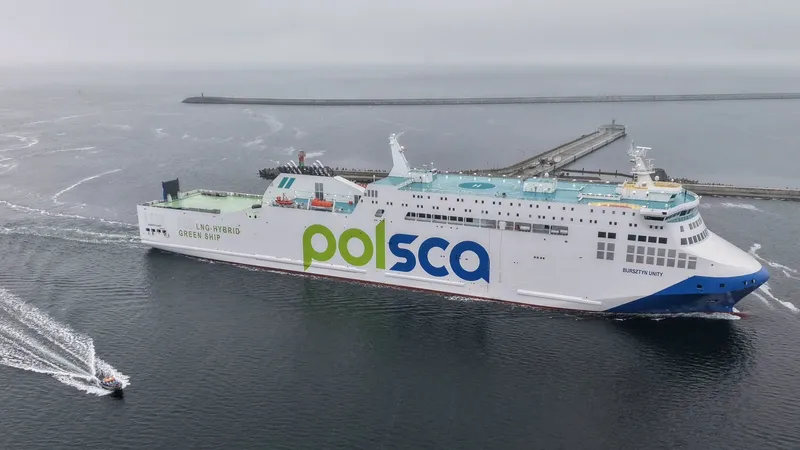
The christening of the ferry Bursztyn Unity in Szczecin matters beyond the symbolic return of the Polish flag. The vessel is part of a wider effort to modernise the national fleet and to reshape how the Polish ferry market works, at a time when international competition is growing and domestic operators are being brought together under the shared POLSCA brand.

In brief
Commentary by Mateusz Dziechciarz of WSB Merito University in Szczecin on Bursztyn Unity, POLSCA and competition in the Baltic ferry market.
A market that opened up
Regular ferry services between Świnoujście and Sweden date back to the 1970s, when the ferry Gryf made the first crossing. Over the following decades Polish shipowners built a strong position on the Baltic, developing both passenger and freight traffic.
In recent years the market has changed considerably as foreign operators expanded, among them TT-Line and Finnlines, which bring modern tonnage and an international operating base. Polish shipowners carried almost 100 per cent of traffic on the Świnoujście to southern Sweden route in 2011. Their share has since fallen to around 60 per cent.
The ferry market on the southern Baltic has therefore evolved from a model dominated by Polish shipowners to open competition. Every decision now being taken in Polish ferry shipping has to be judged against that background.
One brand for three operators
The response to the changing market is POLSCA S.A., which combines the potential of Unity Line, Polferries and Euroafrica Shipping Lines. The shared brand covers four routes: Świnoujście to Ystad, Świnoujście to Trelleborg, Gdańsk to Nynäshamn and Gdańsk to Karlshamn.
The integration is intended to increase the scale of operations, coordinate the service offer, develop a common sales system and make more efficient use of the fleet. From the standpoint of maritime transport economics, what counts most is the chance to achieve economies of scale and to build a stronger company able to compete with international operators.
Three strategic directions in one vessel
Bursztyn Unity was built at Gdańska Stocznia Remontowa. Its christening brings together three strategic directions: fleet modernisation, use of domestic shipbuilding capacity and consolidation of operators.
The success of POLSCA will depend above all on its ability to deliver lasting economic results, on competitive pricing, the quality of customer service, an optimised route network and effective fleet management. Fuel and labour costs, port charges and the requirements of European Union environmental policy will also remain important factors.
From integration to market advantage
The greatest challenge will be turning organisational integration into a real market advantage. A modern fleet is a necessary condition, but not a sufficient one. Success requires a long-term strategy that combines operational efficiency, the development of customer relations and high quality of service.
Bursztyn Unity is therefore not only a symbol of the return of the Polish flag. It is also part of a wider strategy to rebuild the competitiveness of Polish ferry shipping on the southern Baltic.
Source: Gazeta Morska
Comments (0)
The discussion is moderated by the editors: a comment appears after review. Your e-mail address is not published.
Nobody has commented on this article yet.